
This last weekend I was in the Lake District. The reason for the trip was to recce an area in which I plan to stage one of my NNAS Silver navigation courses. While I was there I passed the entrance to Aira Force so decided to pay a visit. I’ve been before but had forgotten how beautifully spectacular it really is. For those that don’t know, Aira Force is a waterfall – several in fact – and as the area had been suffering from heavy rainfall I thought it might be a good time to take a look.
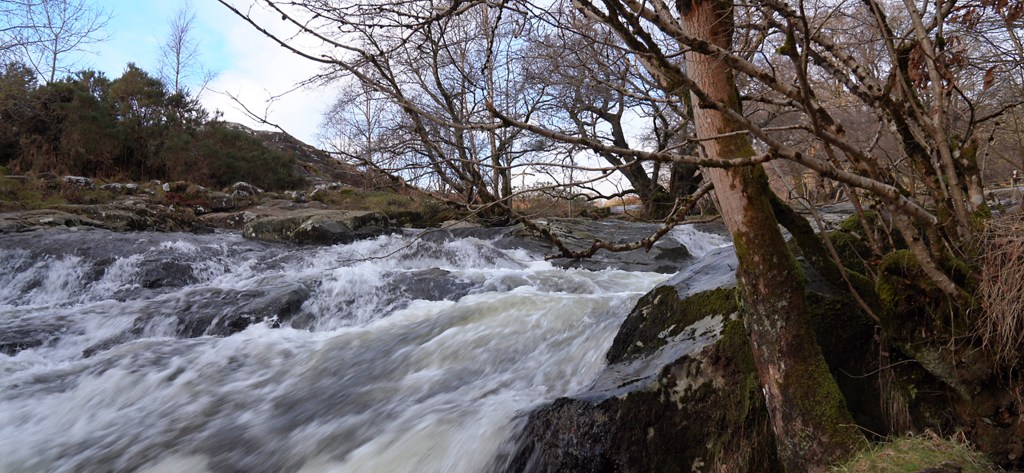
You might ask why it isn’t called Aira Waterfall. Have you ever noticed how few waterfalls are called ‘Waterfall’? It’s far more common for them to be called ‘Falls’ but even ‘Falls’ is just a common English word, and most English waterfalls are called ‘Force’, which originated from the Viking word ‘Foss’. This word is particularly associated with the North of England, and the Lake District, which happen to be both where the waterfalls mostly are and most heavily associated with Danish settlers.

Anyway, I’m digressing. Probably the most well known of the Lake District waterfalls, Aira Force provides us with a great example of what was designed as a landscaped Victorian park which includes not one, but a series of dramatic waterfalls, ancient trees and rocky scenery which is fairly easily accessible to most, and without having to climb too high.

I spent quite a lot of time taking video clips which you may find interesting to watch in conjunction with this blog. If so, click the YouTube link below, and then read on for more facts.
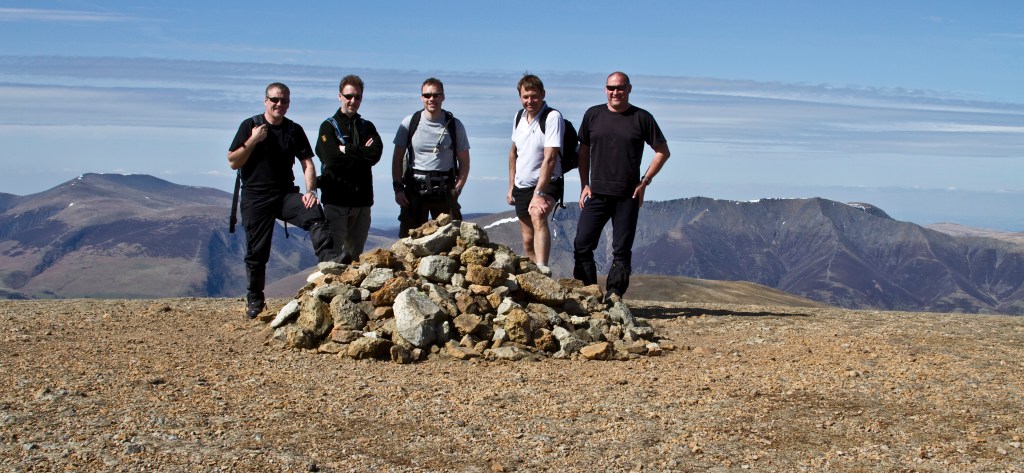
The main force falls 70 feet from below a stone footbridge and is on land owned by the National Trust. The waters come from a stream called the Aira Beck which has its source on Stybarrow Dodd, a mountain accessible via the waterfalls and which is one of the Wainwright Fells. Well worth the climb, I might add. This was a bunch of us up there back in 2010!
The idea to develop the area surrounding the waterfalls originated in the 1780’s when the Howard family of Greystoke Castle had an old hunting lodge which was close to the Ullswater shore. The tower, incidentally, was renovated into what is now Lyulph’s Tower.
The Howard’s landscaped the area around the force, and used it as a pleasure garden, planting over half a million native and ornamental trees, and establishing a network of tracks, footpaths and bridges.
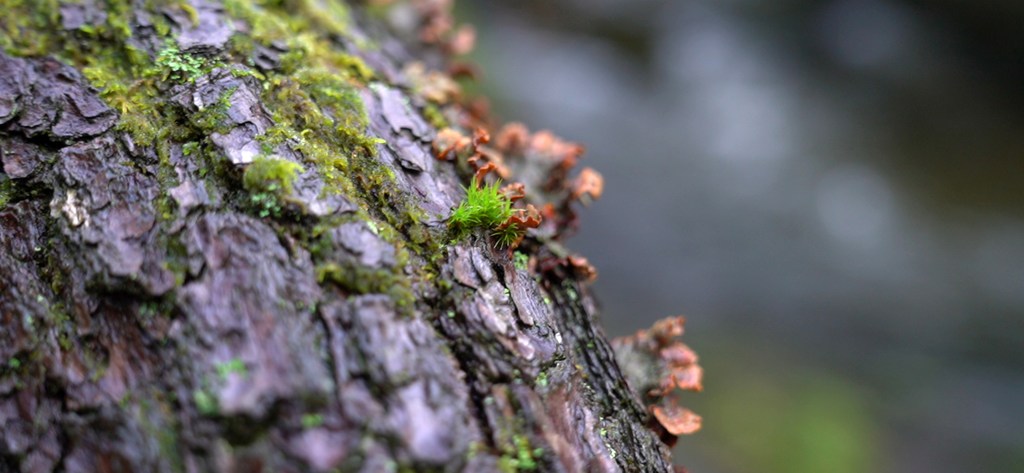
In 1846 the Howards created an arboretum below Aira Force, planting over 200 specimen conifers (firs, pines, spruces and cedars) from all over the world, including a Sitka Spruce now 118 feet high and spectacularly old.
In 1906 Gowbarrow Park, including Aira Force, came up for sale for housing plots. Had that ever happened it would have been tragic, but luckily an appeal was launched by the fairly newly formed National Trust, which resulted in the purchase of 750 acres. The area was saved!
The beautiful stone bridges are in honour of two members of the Spring-Rice family from nearby Watermillock, and were erected by friends and members of the family. In All Saints Church at nearby Watermillock are memorial tablets to members of the Spring-Rice family, one of whom wrote the words to the hymn ‘I vow to thee my Country’.

The famous poet, William Wordsworth, notable at various locations throughout the Lake District, apparently wrote his most famous poem, ‘Daffodils’ (‘I wandered lonely as a cloud’) after wandering along the Ullswater shores nearby, but more of relevance to us here today, in September 1936 he also wrote a short lyric entitled Airey-Force Valley.
“Not a breath of air
Ruffles the bosom of this leafy glen.
From the brook’s margin, wide around, the trees
Are steadfast as the rocks; the brook itself,
Old as the hills that feed it from afar,
Doth rather deepen than disturb the calm
Where all things else are still and motionless.
And yet, even now, a little breeze, perchance
Escaped from boisterous winds that rage without,
Has entered, by the sturdy oaks unfelt,
But to its gentle touch how sensitive
Is the light ash! that, pendent from the brow
Of yon dim cave, in seeming silence makes
A soft eye-music of slow-waving boughs,
Powerful almost as vocal harmony
To stay the wanderer’s steps and soothe his thoughts”.
More sadly, Wordsworth also wrote about a rather sad legend attached to Aira Force in a poem called, The Somnambulist. I won’t quote the poem line for line, but if you fancy reading it you can look it up.
The legend involves a knight, Sir Eglamore, who was betrothed to the beautiful Lady Emma. Although Sir Eglamore loved Lady Emma deeply, he was very much the knight errant and spent much of his time in far off lands fighting all sorts of foreign foes and having many different adventures.

Lady Emma missed him greatly and her health and sleep became affected. She began to walk in her sleep and one night she roamed beyond the gardens and up to the place of one of their favourite haunts – yes, you guessed it – the waterfalls of Aira Force – where she stood on the very edge of the steep-sided ravine.

By coincidence, it happened that Sir Eglamore returned that night and not finding her at home he made his way up to Aira Force. There, he saw her standing on the edge of the thundering water and called to her. She showed no sign that she had heard him and he became concerned and confused. Thinking it was the sound of the water that prevented her hearing him, he gently touched her shoulder. She shuddered and suddenly awoke from sleep in shock and stumbled forward plunging over the edge and down into the icy arms of the fast moving torrent.
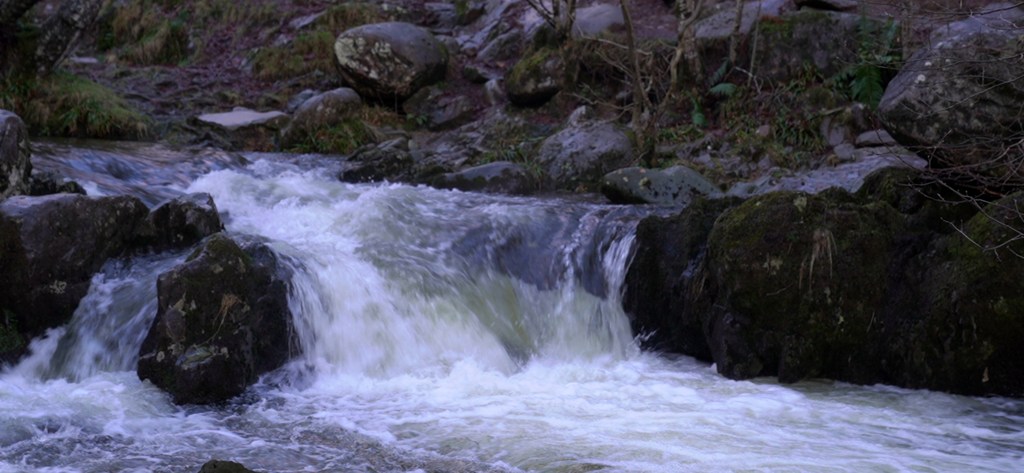
Needless to say, Lady Emma perished and apparently, in his grief, Sir Eglamore took to living in a cave above the waterfall and became a hermit. To prevent another tragedy he built a bridge across the stream.
My question here has to be did she jump or was she pushed? I think that today, it would be categorised as a major incident.

So back to the present day. Should you wish to visit, at the main Aira Force car park there is a tea room and an information kiosk and shop which sells snacks and gifts. There is a recently added pier on Ullswater just below Aira Force, which connects to Glenridding and Pooley Bridge on the blue and red timetables of the Ullswater Steamers.
Highly recommended if you’re anywhere near Ullswater.
 One Spark Outdoor Adventures