
It would be fair to say that the weather in the mountains of the UK has been pretty grim over the last few weeks, and although it can still have its attractions as far as mountain adventures goes, as far as photography is concerned, it’s pretty restrictive.
So instead, this is the first of a couple of blogs I’m going to do relating to lower altitude areas of the UK – out of the cloud, in occasional sunshine, and host to various species of stunning wildlife!
I’ve also just invested in some new camera gear too, mainly for video recordings, and wanted to test it out in more favourable conditions before I take it into the mountains.
I’ve produced a video relating to this trip which you can watch on YouTube by clicking the link below. It’s the first 4K Ultra HD video that I’ve produced so far and as well as trying out the new camera, I also spent more time in the editing process (a week!) in an attempt to iron out little glitches in frame transition and other such processes. I’m pleased with the results anyway and see it as a way of moving forward in quality for future epics, although not all of the footage was taken using the new gear!
So, without further ado, I introduce to you Flamborough Head – an iconic feature of the East Yorkshire coast situated between Filey and Bridlington. If you’ve watched the video, this will fill in a few gaps in relation to some of the things it featured. Firstly, and as you will now be aware of, Flamborough Head is a chalk headland, with sheer white cliffs.

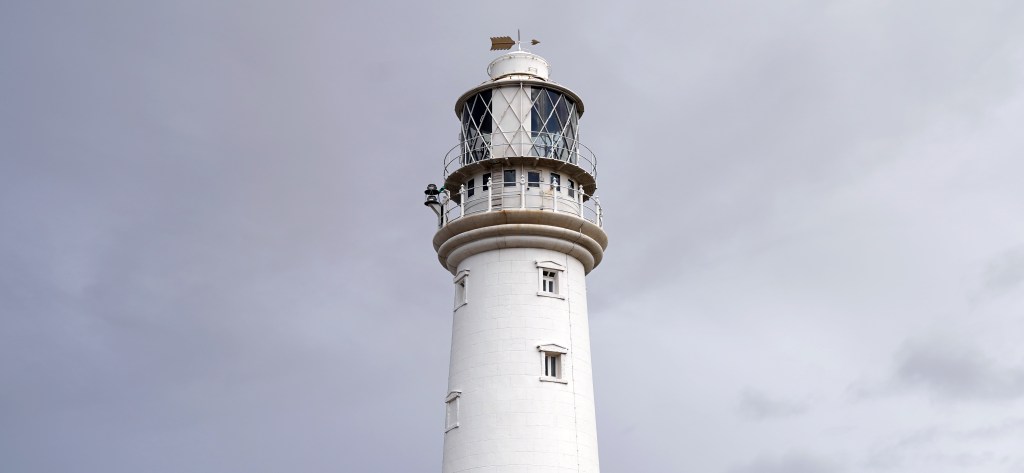
There are two historical lighthouses set on the high chalk cliffs, the oldest was built in 1674 and is the earliest known lighthouse still in existence in the UK. It was designated a Grade II listed building in 1952 and is now recorded in the National Heritage List for England, maintained by Historic England.

It was built by order of Sir John Clayton, on a commission from Charles II. His plan was to build two more lighthouses and earn money by charging tolls from ships rounding Flamborough Head. However, he went bankrupt after the Flamborough Lighthouse was built, and as a result, the other two lighthouses were never constructed and the Flamborough one was never used. It was built largely of chalk and was designed to emit light by way of a beacon fire of brushwood or coal on the roof.

It was restored in 1996 at a cost of £100,000 and is a stunning landmark.
The newer lighthouse was commissioned in modern times (1806!) and cost £8,000 to build – in those times, a lot of money.

It initially used a clockwork mechanism to rotate an oil lamp as a warning beacon. In 1925 the tower was raised to its present height of 85 feet, and in 1992 a 1000-Watt halogen bulb was installed and operates to this day.
The cliffs, as well as being of international significance for their geology, provide nesting sites for many thousands of seabirds, usually only present in spring and autumn.
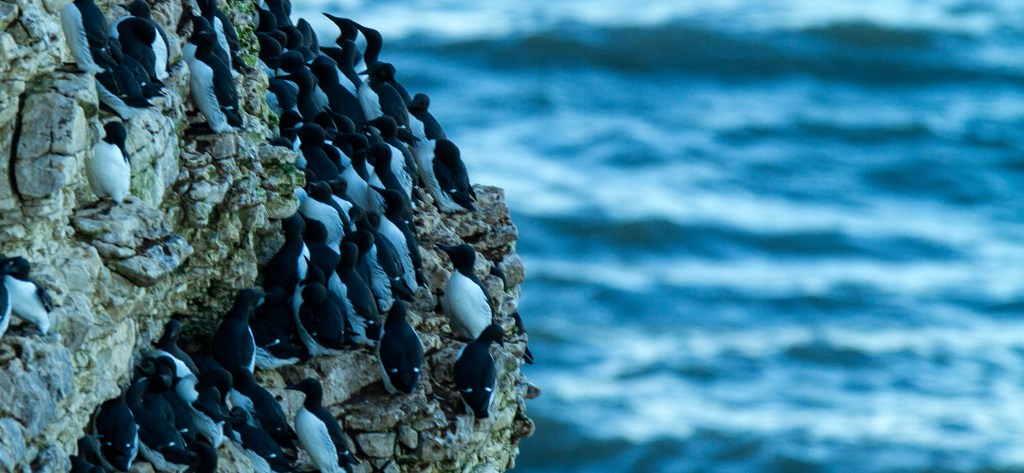
The guillemot is one of the most numerous birds in the great ‘seabird cities’ around the UK coastline, particularly in spring and summer.
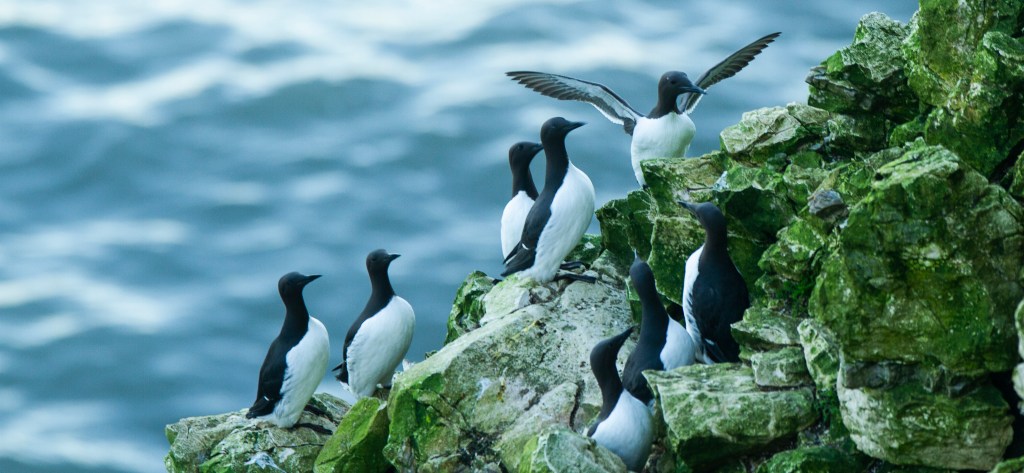
They usually come to land at that time, only to nest, spending the rest of their life at sea and as it was January at the time of my latest video, I was surprised to see any at all. As far as I was aware, in winter they are widespread around UK coasts but usually well offshore, only being seen inshore after gales or when passing by longer headlands.
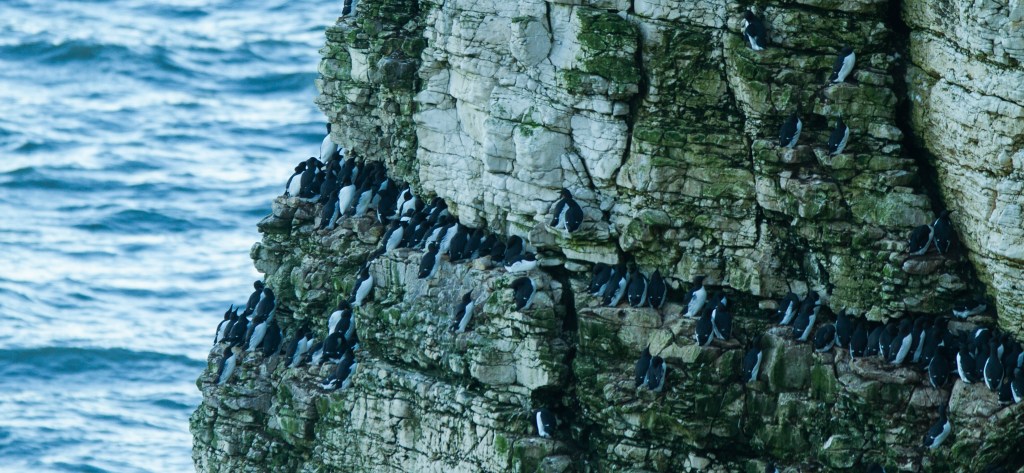
More surprisingly, the birds I saw were in their summer plumage! Winter plumage tends to have more white feathers than you can see from the images here. Could it be that our warming climate is having something to do with the early summer plumage?
A bit of research revealed that on the Isle of May, in Scotland, there has been a noticeable return where birds start appearing back on the cliffs from early November.
Ongoing studies seem to indicate that birds on the Isle of May return daily throughout the winter months to the cliffs occupied during the summer, as the urge to establish and defend a good cliff ledge is far too strong, even in winter. It is also considered that this behaviour is also used to maintain their pair bond.
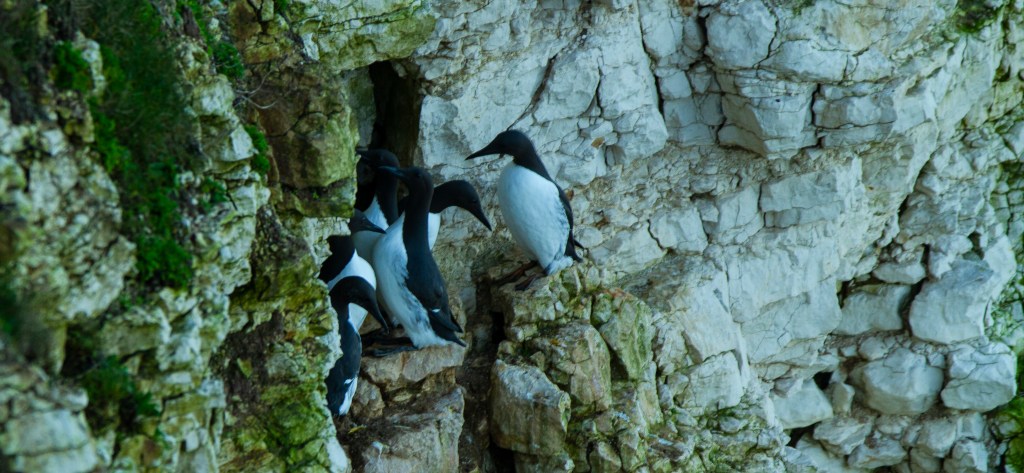
My visit was made over two days in January, a week apart, the 2nd and the 8th, and the guillemots I saw were only present on the 2nd, there being no sign of them a week later. I felt like I had possibly witnessed something unusual here, particularly in relation to the summer plumage being seen in winter. Is it becoming more of a norm as our climate changes? Food for thought.
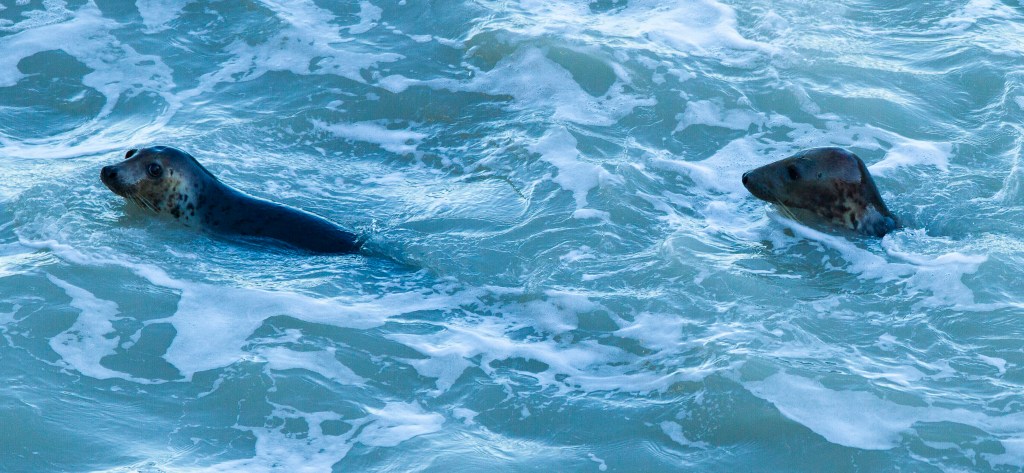
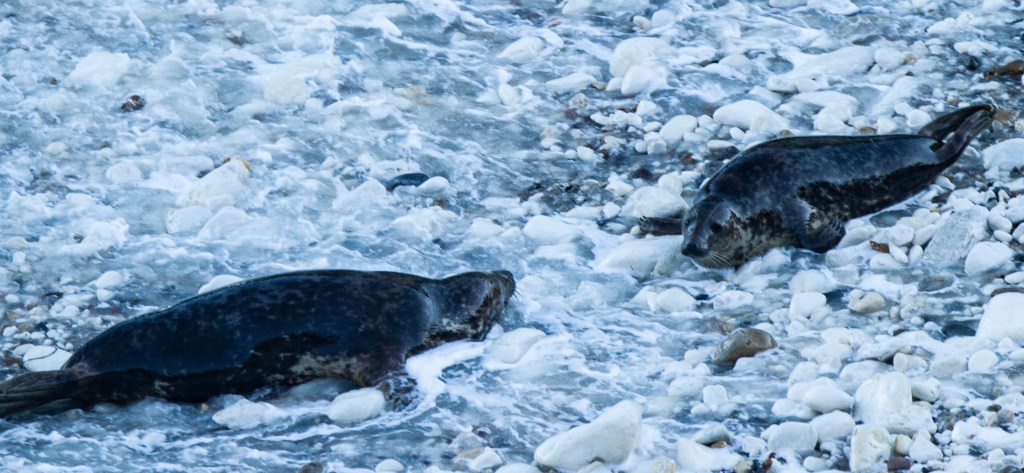
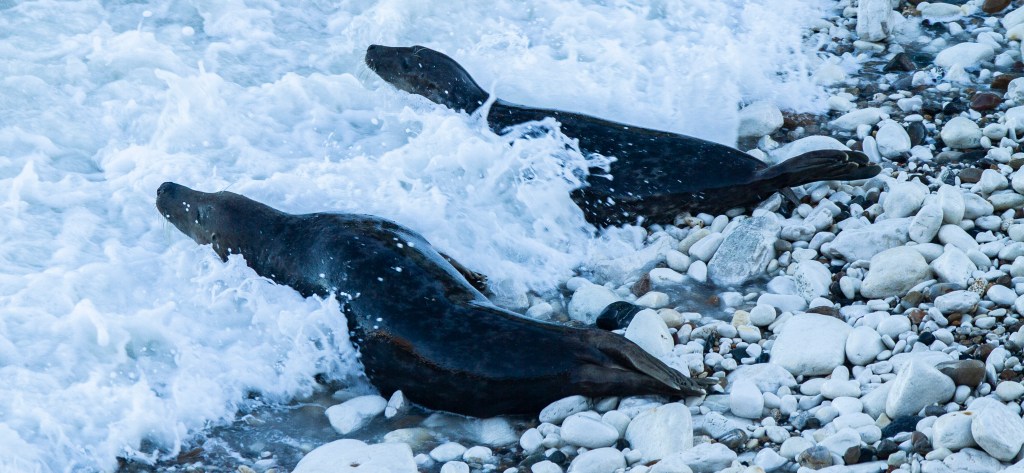
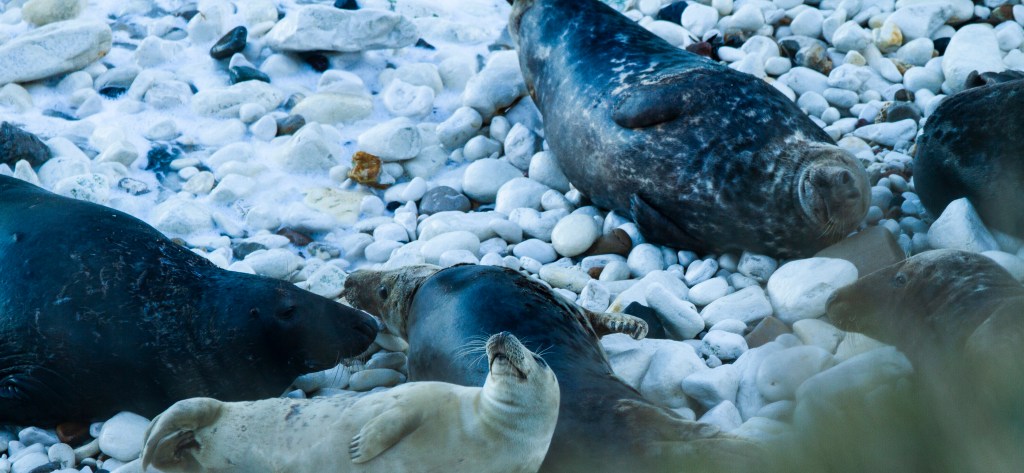
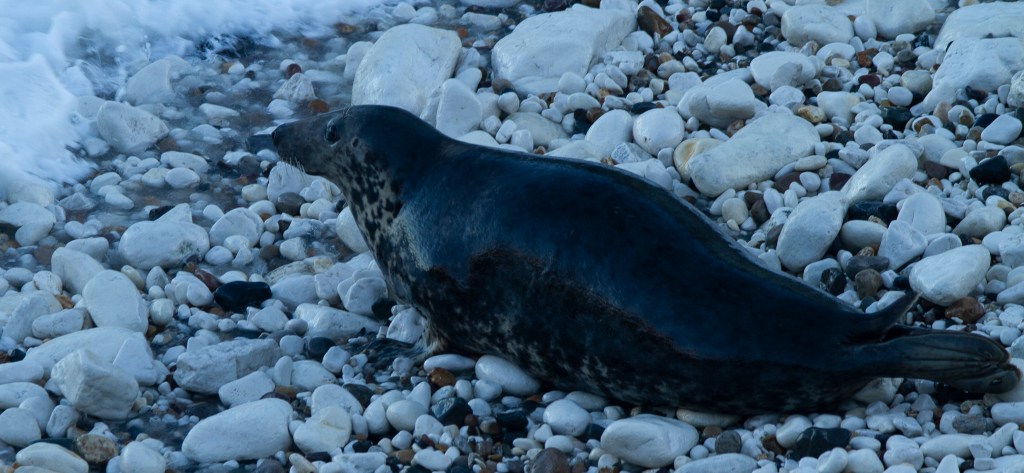
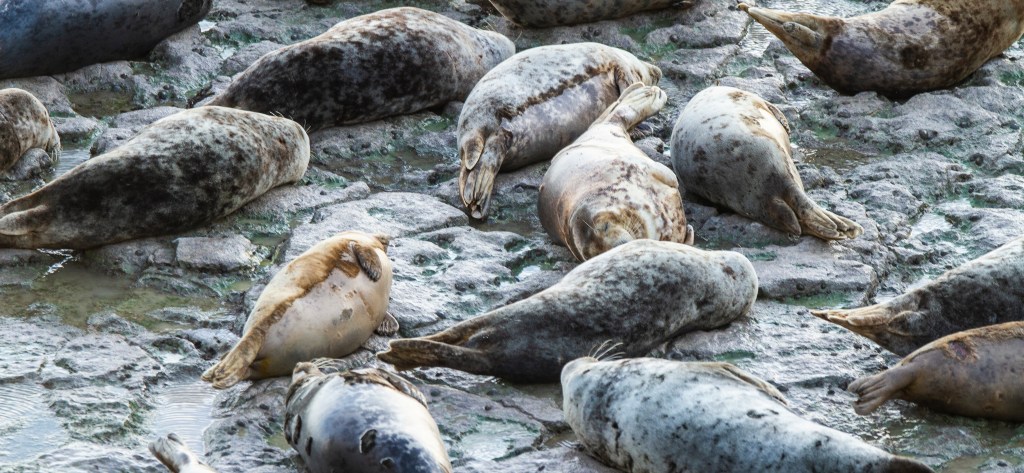
Moving on to the seals. As we walked from the lighthouse car park towards the headland, we passed a young couple with a child who asked us if we’d seen the two seals in the bay. Excitedly we saw the two they mentioned, although a bit distant, before continuing to the bay guarded by a jaw of cliff known as the ‘drinking dinosaur’.
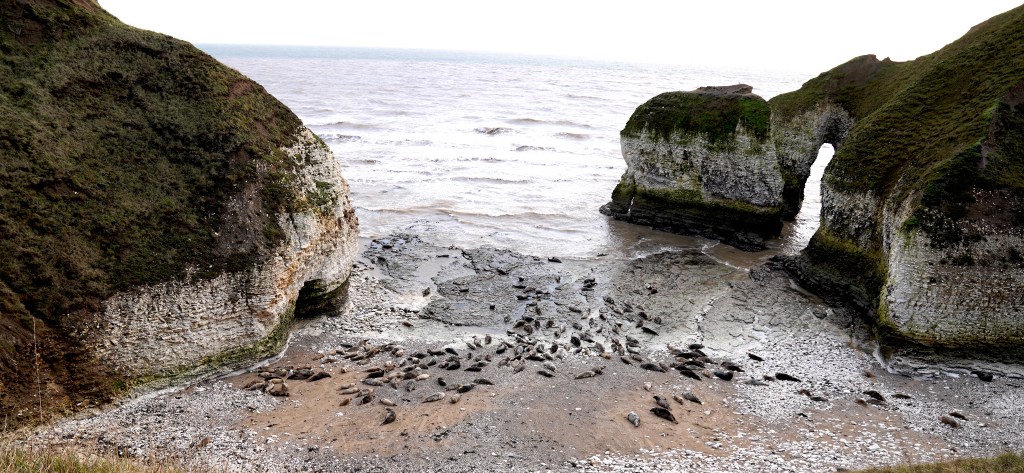
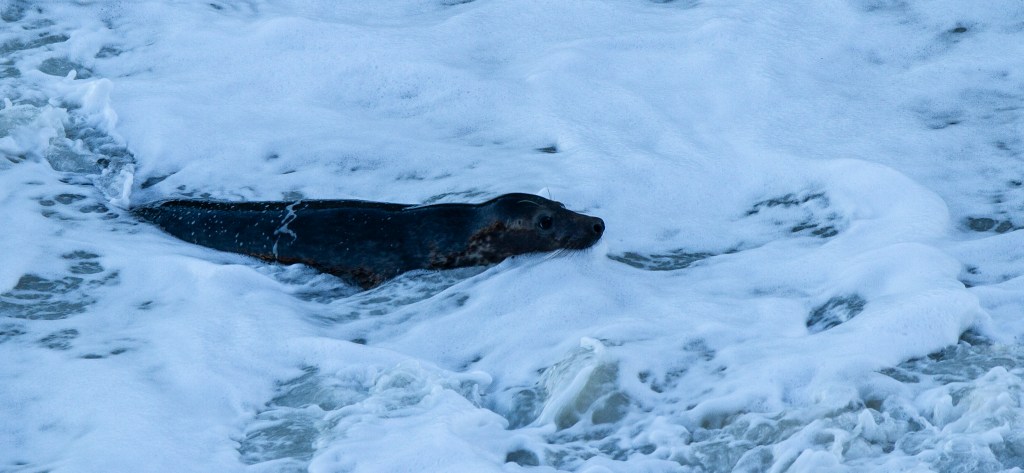
The reason for that is obvious by its shape. I can’t describe how amazing it was to then see that on the beach there were hundreds of seals basking on the sand, pebbles, and rocks, as well as playing in the water. The sun was low in the sky so the light wasn’t that brilliant, but I hope you find the following pictures interesting. Just click on them to view the full-size image.






Thanks for reading. I hope you enjoyed this.
 One Spark Outdoor Adventures