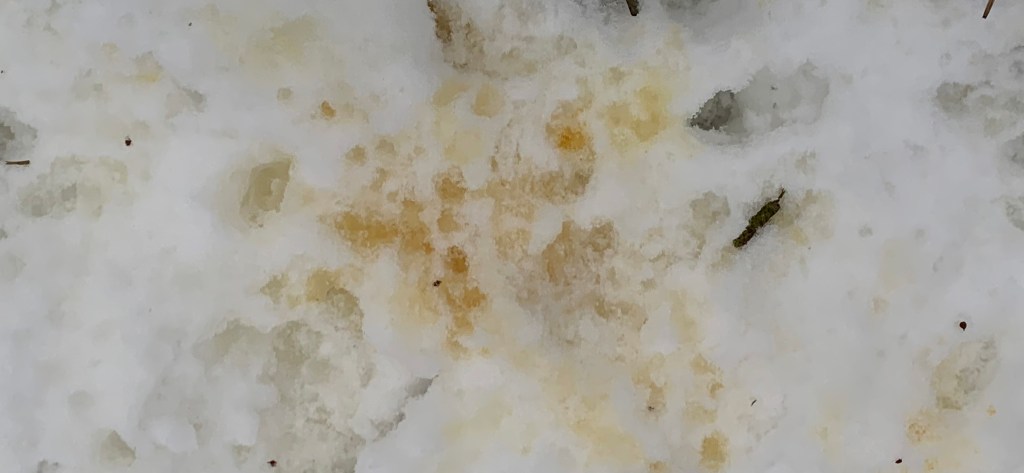
Why is he telling us about yellow snow you’re probably thinking. Well, in the UK, certainly the lowland UK, we don’t see snow that often. And if it’s yellow, be wary!
When we do have snow it doesn’t hang around for long. Last week we had a particularly cold snap and the south of England had a pretty substantial snow fall.
During that week I had to go down to Hertfordshire to have some machinery repaired. I was going to have to wait for some time until the tech wizards worked their magic so I decided to fill my time usefully and head to the Fowlmere nature reserve.

I recall a survival course many moons ago where water sourcing was one of the subjects and although snow can be melted to provide drinking water, you obviously collect fresh snow and not ‘yellow snow’. This was a bit of a joke on that course.
Of course, the usual reason for snow being yellow is due to urine being deposited on or into it and you clearly wouldn’t want any of that as part of your morning cuppa!
I recall a song from way back in my youth called “Don’t eat the yellow snow”, I think by Frank Zappa, the subject of which was a young Eskimo called Nanook. His mother warned him repeatedly:
“Watch out where the huskies go,
And don’t you eat that yellow snow
Watch out where the huskies go,
And don’t you eat that yellow snow”.
Good advice, I’d say, and I always subconsciously hear Nanook’s mother singing those words to him when I see yellow snow.
Anyway, I find it’s easy to get diverted when writing a blog and you’ll see that this one is going to shoot off in a few directions.
I like to think that’s because of an enquiring mind being installed on my shoulders! It’s not always an advantage though, as sometimes it mixes up its subject matter to provide a hearty ‘trivia soup’.
Going back to emergency drinking water, a certain TV survival expert was once seen drinking his own pee. What!!! People frequently but jokingly mention that to me when they hear that I’m going to stay in the woods or up a mountain for a few days. No chance!
At this point I must stress that the only way to safely do that is to boil it and collect droplets from the steam the boiling pee generates which you could then drink. In other words, distill it.
But I would need to be desperate and there are many other sources of water which I’d investigate before I went down that line. In fact I’d investigate EVERY other potential source before going down that line!
Anyway, enough of all that. Let’s go back to Fowlmere.
There’s a good car park there but it was clear, due to the undisturbed snow, that not many people, including Nanook, thought it a good idea to visit when the weather here was sub-zero, and they had a nice fire burning at home. Husky asleep on the fireside rug. Fair enough. I can see the benefits there.
I parked close to a hedge line which bordered a shallow ditch. Along the ditch apart from the usual Hawthorn were a good number of Alder trees.
Going back to my water sourcing course, Alder along with Willow, are pretty much guaranteed water indicators. It may not be immediately apparent as a running stream but you can guarantee that H2O won’t be that far away.
Incidentally, another spin-off fact for you here – Alder thrives in wet locations and its association with a bacterium called Frankia alni, enables it to grow in poor quality soils.
Frankia alni forms a symbiotic relationship exclusively with Alder – it’s all to do with chemical processes involving nitrogen and oxygen molecules which I don’t pretend to fully understand – but the end result is that the trees improve the fertility of the soils in which they grow and are considered to be a pioneer species, making the soil more fertile and thus enabling other species to become established.
The most common variety of Alder we see here in the UK is Common Alder (Alnus glutinosa). The Alder species is native to Europe, Southwest Asia, and Northern Africa and is part of the Betulaceae family.

The tree produces a cone-like flower containing male and female parts.
Once the female flower is pollinated, the flower turns brown and hardens into a ‘cone’ which holds the seeds.
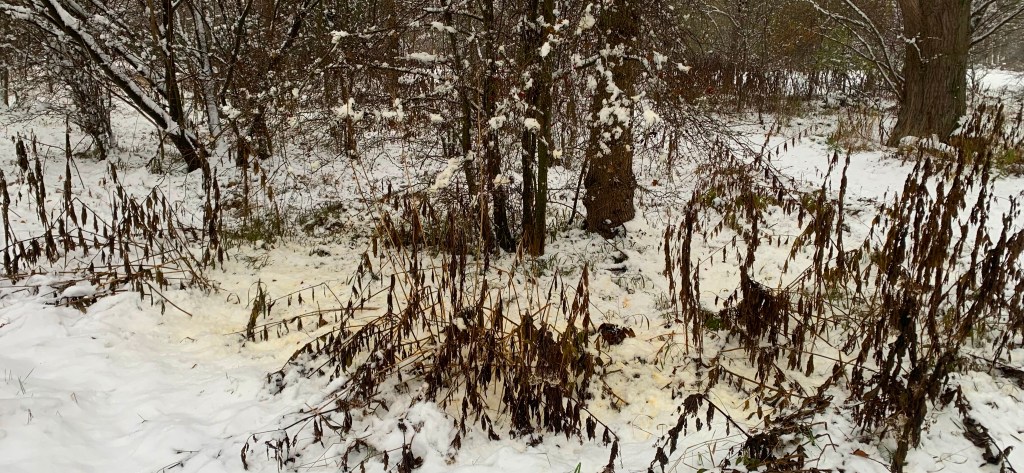
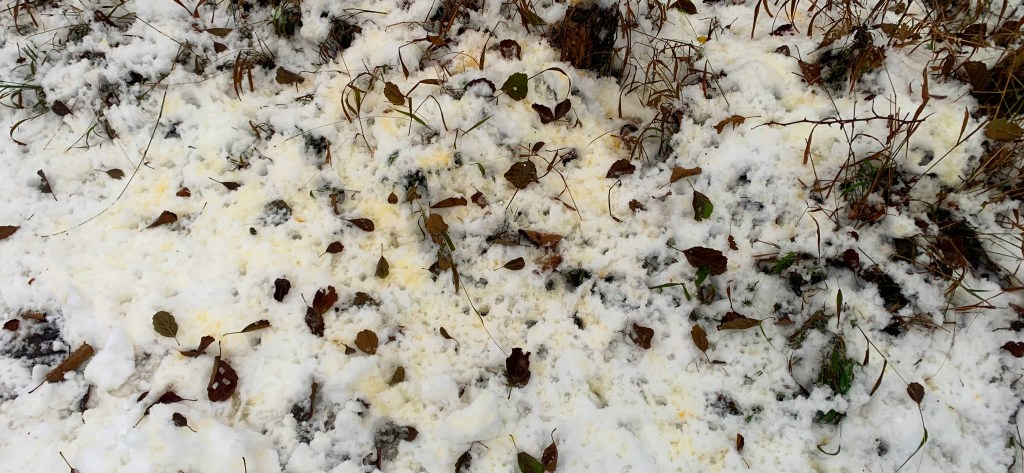
But there I go again. Trivia Soup. Under these Alder trees was a LOT of yellow snow. My first thought was users of the car park – people or Huskies. No. Hardly any footprints of either.
Birds sitting in the trees and peeing into the snow underneath? No.
Why not?, you might ask. This is indeed an interesting question and one that does not have a simple yes or no answer.
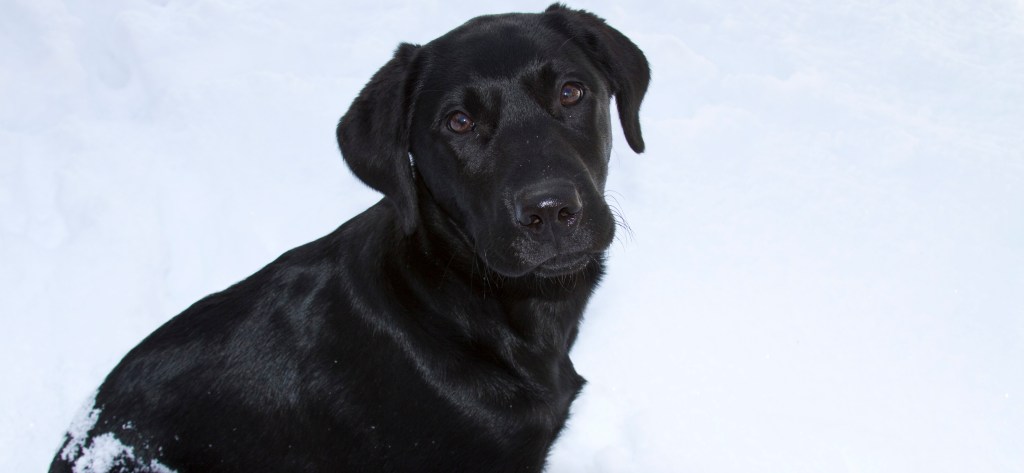
We Humans,and other mammals too, including Lucy here, drink water to help digest food, get rid of waste and keep the body hydrated and functioning as it should.
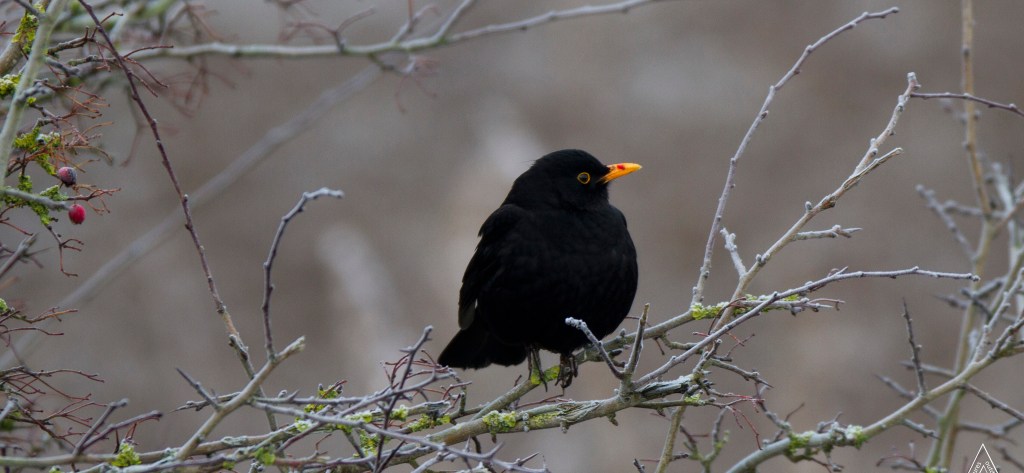
Most birds need to drink water too but require less than mammals as they don’t have sweat glands. Most need to drink water daily and the amount they drink varies on the species and size of the bird. Small birds drink at least twice each day to replace water lost through respiration and droppings.
But now we get to the main bit.
Technically speaking, birds don’t pee. Instead, they excrete urine in a solid uric acid form along with their poo. If you’ve seen a bird poo, then you’ve also seen it pee.
Fascinating eh! The white but in bird poo is the uric acid, in other words, their version of pee.
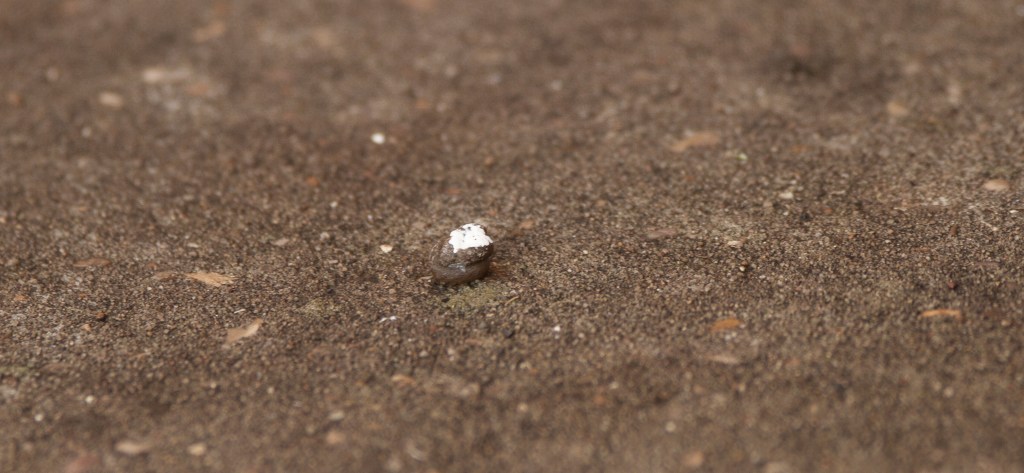
And it’s not yellow. So our yellow snow is not as a result of hundreds of birds deciding any particular Alder tree is their toilet block.
As I moved into the snowy woodland I noticed that the ground under every Alder tree was stained yellow, as it had been in the car park. This was something coming from the tree, and you don’t need to me to tell you that trees don’t pee!

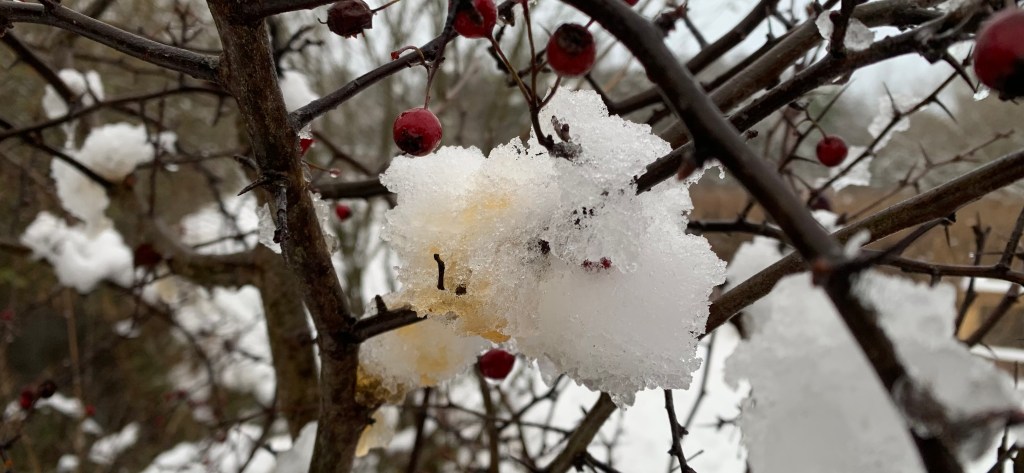
As I looked at the snow sitting delicately on the branches and twigs of the alder, the cones were proudly hanging there proclaiming “We are Alder. We are special” and I noticed a droplet of melting snow on one of them was a beautiful amber colour. Just then it released it’s watery grip on the dark brown cone and fell into the white ground underneath giving the snow an instant yellow hue.
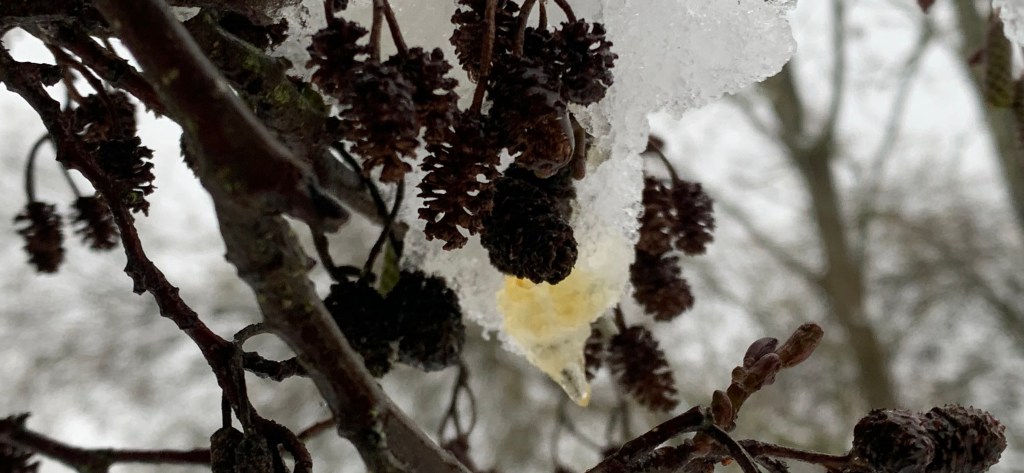
Yellow snow has had bad press for years !
I then recalled that a friend of mine, who had a couple of aquariums, once asked me how he could identify and source Alder cones as he’d heard that they were good to lower the pH level in the water, in turn making it a better place for his fish. We found some. He used them. He was happy. I was happy I’d helped. His fish were happy I had. We all moved on.
But here I am in the woods at Fowlmere in the presence of a lovely Alder tree. You know when you have a lightbulb moment? You’re muddling around in the dark with a jumble of thoughts and then all of a sudden someone flicks on the switch and it all becomes clear? That’s what I had then.
I realised that Alder cones are naturally rich in tannins. What the cones were doing was releasing tannic acid into the aquarium water which lowered the pH level! I also know that tannic acid, phenols, and other compounds leached from alder cones appear to have anti-fungal, anti-bacterial, and anti-parasitic properties, but that’s incidental.
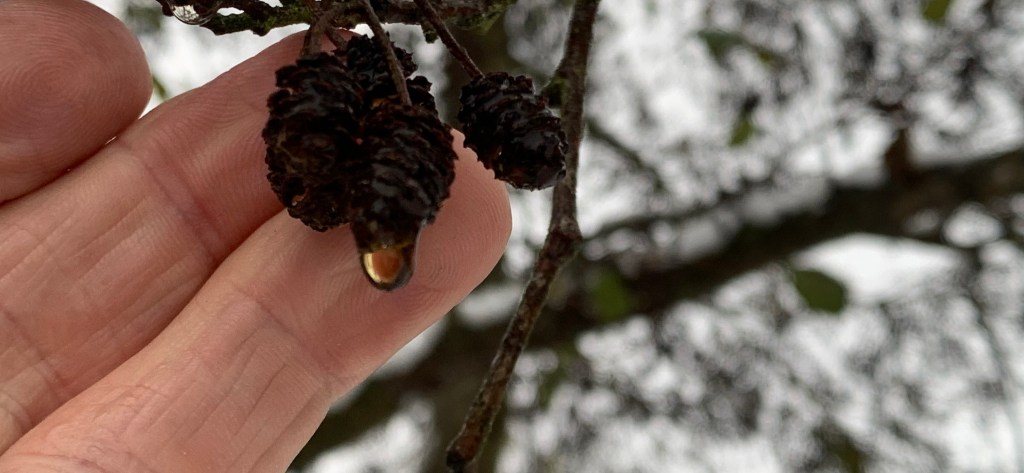
What I now know is that they also make yellow snow and I’ve cooked up a delicious trivia soup for you to savour over the next few weeks.
Happy Christmas everyone!
 One Spark Outdoor Adventures