
I’m usually reporting from the mountains but there are plenty of interesting things to see around Lincolnshire. A couple of weeks ago a trip to the North Sea coast seemed like a good idea.
In the UK we have two species of seal, firstly the Common Seal, also known as the Harbour Seal, and secondly the Grey Seal, also known as the Atlantic Grey Seal.
Now before someone picks up on the fact that I have capitalised the name ‘Grey Seal’ throughout this article it’s because I personally think such majestic animals deserve it. Yes, it’s not grammatically correct but , unlike types of produce and plant cultivars which are allowed to be spelt with capital letters, it seems that animals should be given no special treatment. My dog, Lucy, is special of course, but her breed name, labrador, apparently merits no capitalization.
However, many names of breeds of dogs and cats are exceptions, for example the German shepherd and the Siamese cat. The preponderance of such examples may be the cause of confusion about capitalization of animal names. I’m not confused – I just like to give the wild animals I talk about the capital letters that I think they deserve!
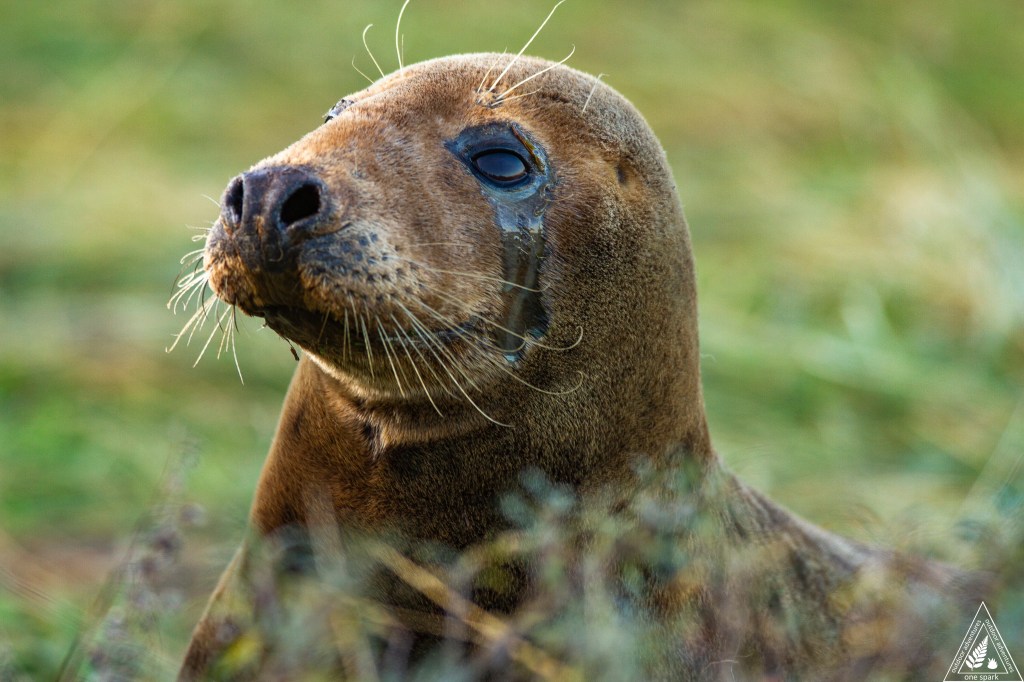
Anyway, moving on, I was aware that every winter, the Grey Seal comes ashore in various places around the UK, in large numbers, basically to have babies and breed. Having spent their summer days out at sea, as winter bites the seals return to shore to give birth to their young and do their courting. One such place is Donna Nook Air Weapons Range, still actively used by military aircraft.
You would think that this activity would put the seals off but not at all. Donna Nook is a 6.2-mile-long nature reserve maintained by the Lincolnshire Wildlife Trust. It is designated as a National Nature Reserve and is also a Site of Specific Scientific Interest (SSSI) due to its sand dunes, salt marshes, mudflats and of course, the Grey Seal populations. It is the only national nature reserve in the UK on MOD land and was opened in 2002. The bombing range covers an area of 885 hectares on land and 3200 hectares at sea.
It’s difficult for me not to be distracted by varieties of wild plant, especially when caught in late afternoon winter sunlight. This is Sea Buckthorn (Hippophae rhamnoides), a thorny shrub found along the British coast, and abundant at Donna Nook. The sour berries are a great source of vitamins and antioxidants and can be used the same way as citrus fruit. Notably, it has more vitamin C than oranges and more beta-carotene content than carrots. This is an essential pick for coastal foragers.
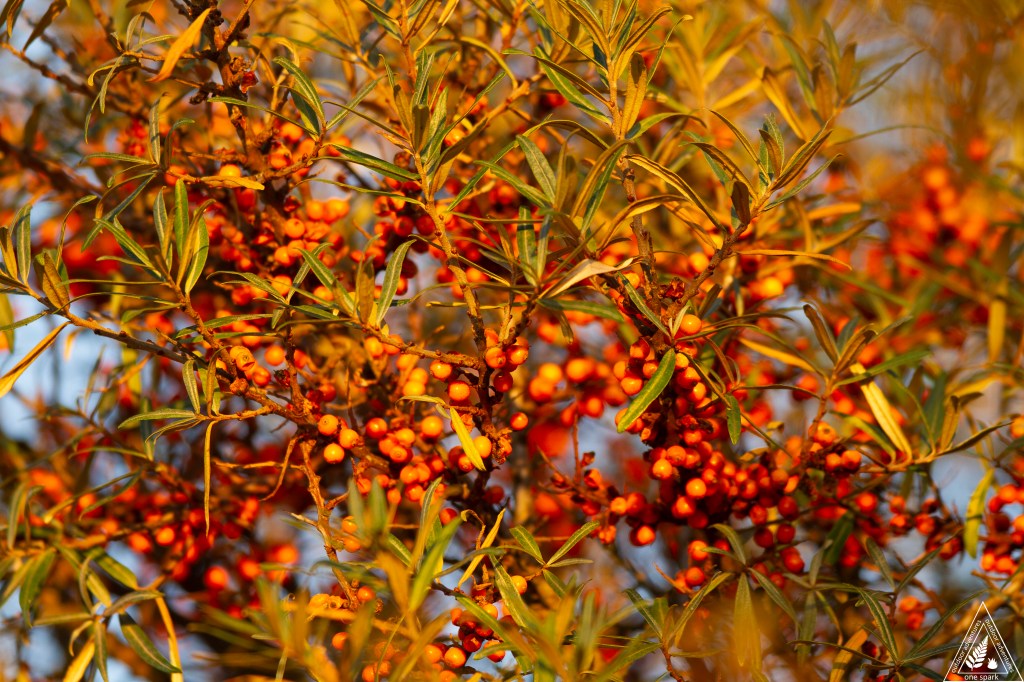
Sea Buckthorn is exceptionally hardy, tolerates high concentrations of salt and withstands ridiculously low winter temperatures. Therefore, it very often prevents other larger plants from outcompeting it and creates impenetrable thickets.
That’s the plant information for you. Let’s return to the Grey Seal.
In the UK seals are protected under the Conservation of Seals Act 1970; however, it does not apply to Northern Ireland. In the UK there have also been calls for a cull from some fishermen claiming that stocks have declined due to the seals.
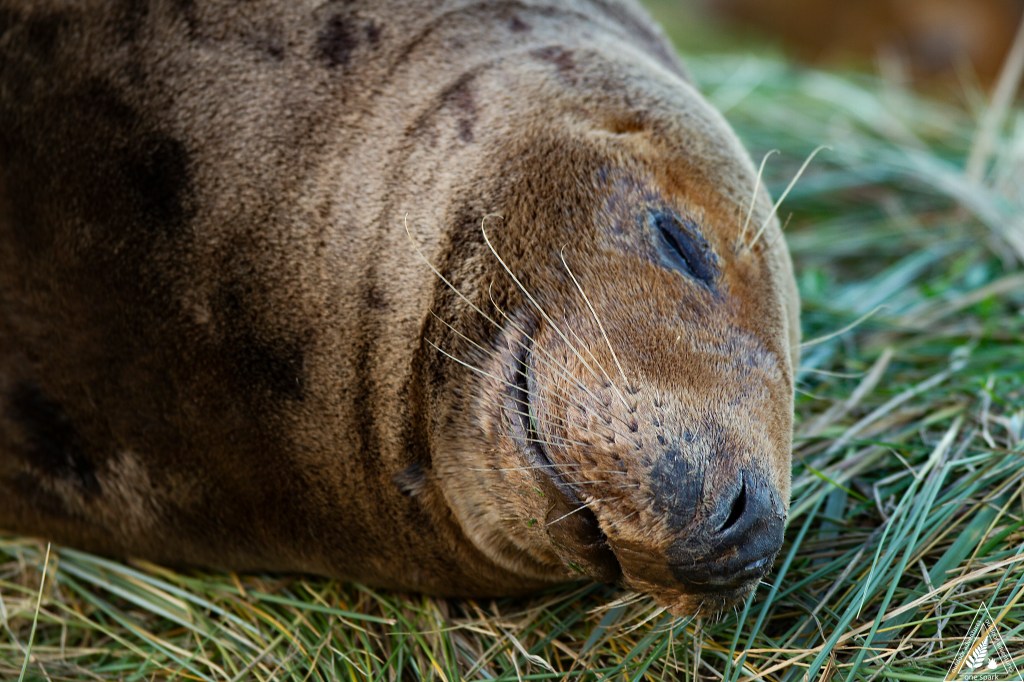
Donna Nook is one of the UK and Ireland’s largest breeding colonies of Grey Seals, with around 2000 pups born here from October to December every year. Other notable colonies are at Blakeney Point in Norfolk, the Farne Islands off the Northumberland Coast, Orkney and North Rona off the north coast of Scotland, Lambay Island off the coast of Dublin and Ramsey Island off the coast of Pembrokeshire.
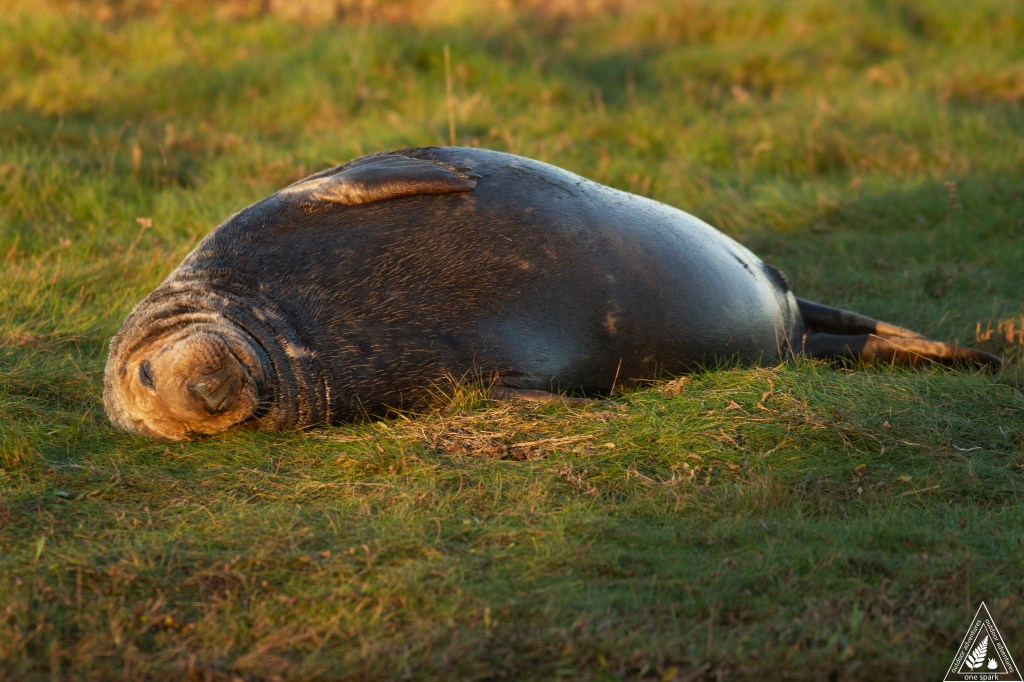
When we visited on the 19th November, there were apparently 914 pups, 1169 cows and 362 bulls present on the flats. How the Lincolnshire Wildlife Trust manage to accurately count them all is pretty amazing as they are spread over a pretty wide area.
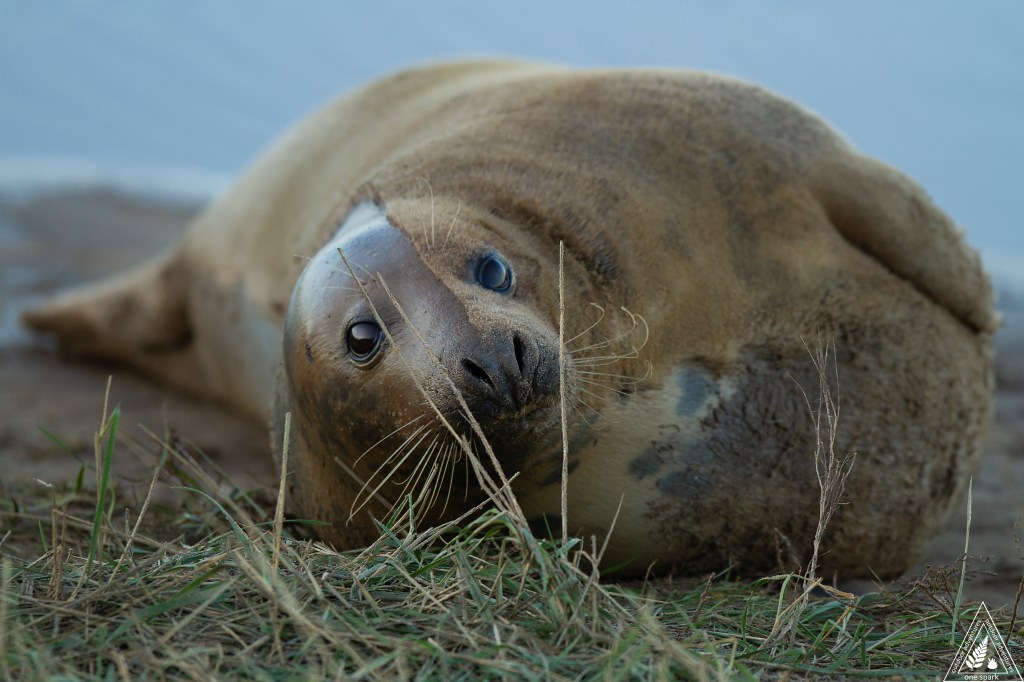
The Grey Seal (Halichoerus grypus) is the larger of the two UK seal species. Their scientific name is Halichoerus grypus – which translates to hook-nosed sea pig! It is a large seal of the family Phocidae, which are commonly referred to as “true seals” or “earless seals” and it is the only species classified in the genus Halichoerus.
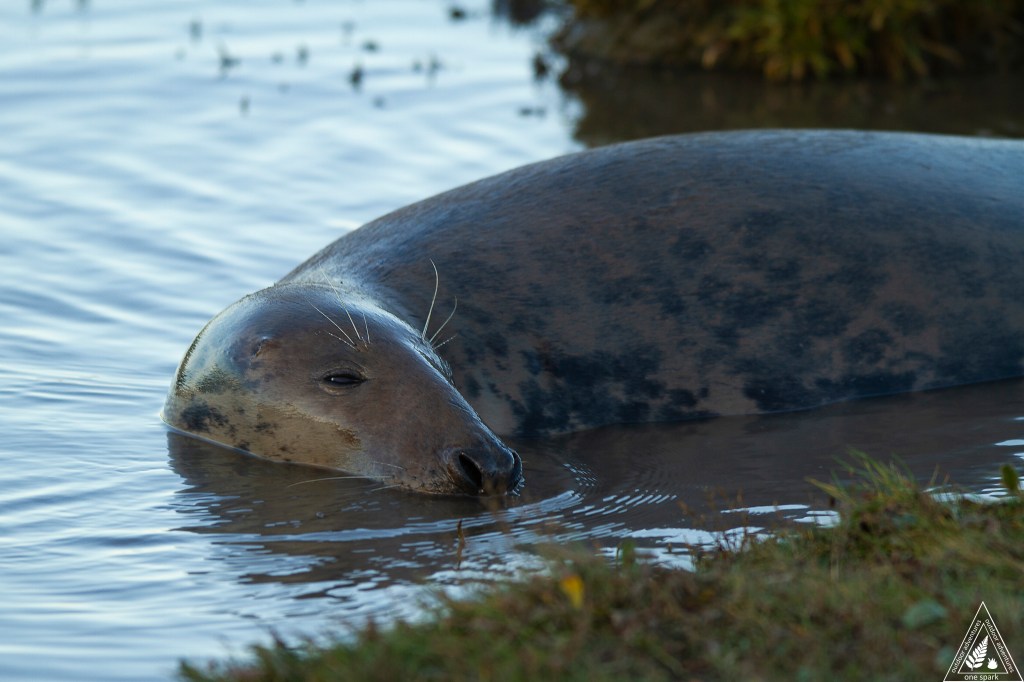
Despite numbers dropping to only 500 in the early 20th century, it’s estimated that there are now more than 120,000 Grey Seals in Britain, representing 40% of the world’s population and 95% of the European population.
The Grey Seal feeds on a wide variety of fish, mostly benthic or demersal species, taken at depths down to 70 m or more. Sand eels are important in its diet in many localities. Cod and other gadids, flatfish, herring, wrasse, and skate are also important food sources for the Grey Seal.
In case you were wondering what those terms actually mean, Demersal fish, also known as groundfish, live and feed on or near the bottom of seas or lakes (the demersal zone).Benthic fish are denser than water, so they can rest on the sea floor and Gadids are carnivorous, feeding on smaller fish and crustaceans.
However, Grey Seals will eat whatever is available, including octopus and lobsters. The average daily food requirement is estimated to be 5 kg, though the seal does not feed every day and it fasts during the breeding season.
Recent observations and studies show that Grey Seals will also prey and feed on large animals like Common Seals and Harbour Porpoises. In 2014, a male grey seal in the North Sea was even documented and filmed killing and cannibalising 11 pups of his own species over the course of a week.
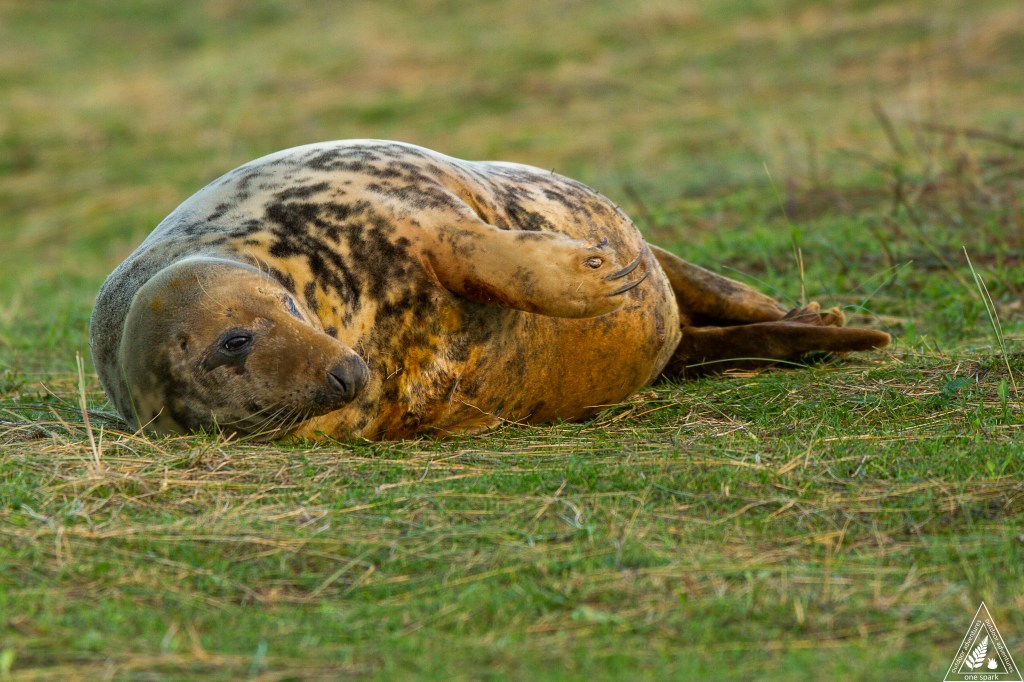
Similar wounds on the carcasses of pups found elsewhere in the region suggest that cannibalism and infanticide may not be uncommon in Grey Seals. Male Grey Seals may engage in such behaviour potentially as a way of increasing reproductive success through access to easy prey without leaving prime territory.
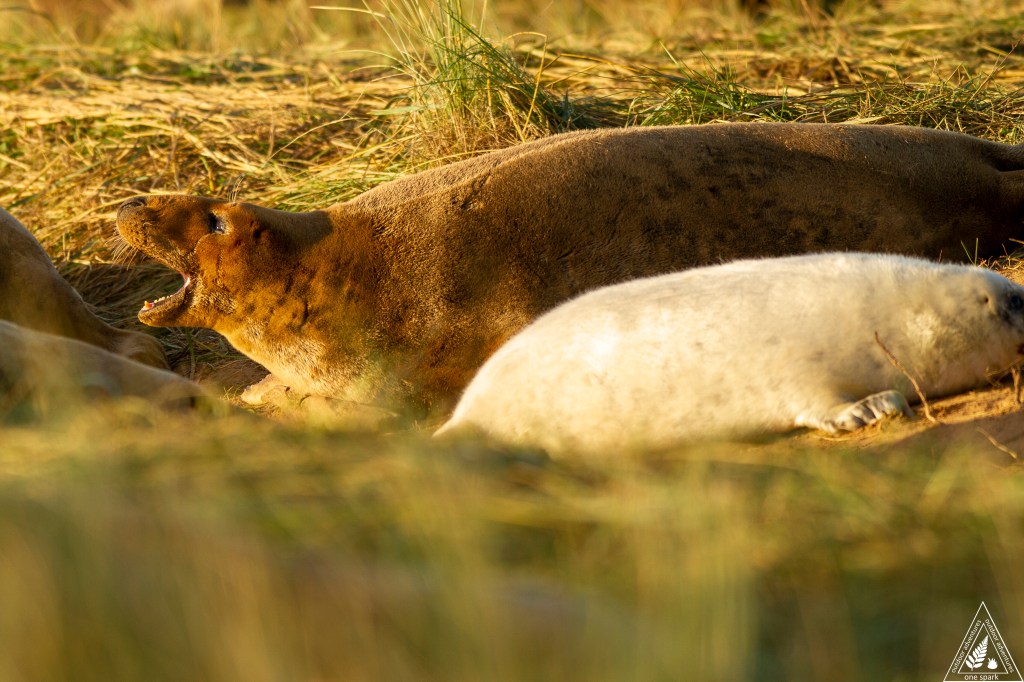
The Common Seal (Phoca vitulina) is also found on our shores all year-round. When not at sea, Common Seals are found around sheltered shores and estuaries, where they haul out on sandbanks and beaches. When out of the water, they sometimes hold their body in a curved banana position, with their head and tail both in the air at the same time. Like Grey Seals, they feed on fish, but also eat squid, whelks, crabs, and mussels. Common Seal pups are born during the summer, generally June and July, and the pups can swim when they are only a few hours old, unlike Grey Seals.
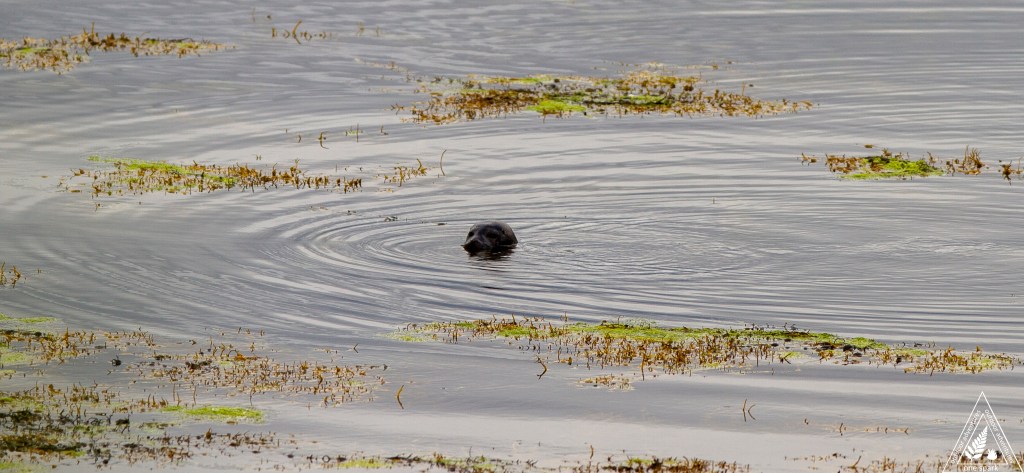
The Common Seal is smaller in size with a shorter head, shorter stepped snout, and more concave forehead giving them a cuter, more cat-like face. They are very variable in colour, from blonde to black, but generally grey with dark spots. The above photograph was taken in Mull earlier this year.
The Grey Seal can be distinguished from the Common Seal by its larger size and longer head with a sloping ‘roman nose’ profile, a bit like an English Bull Terrier.
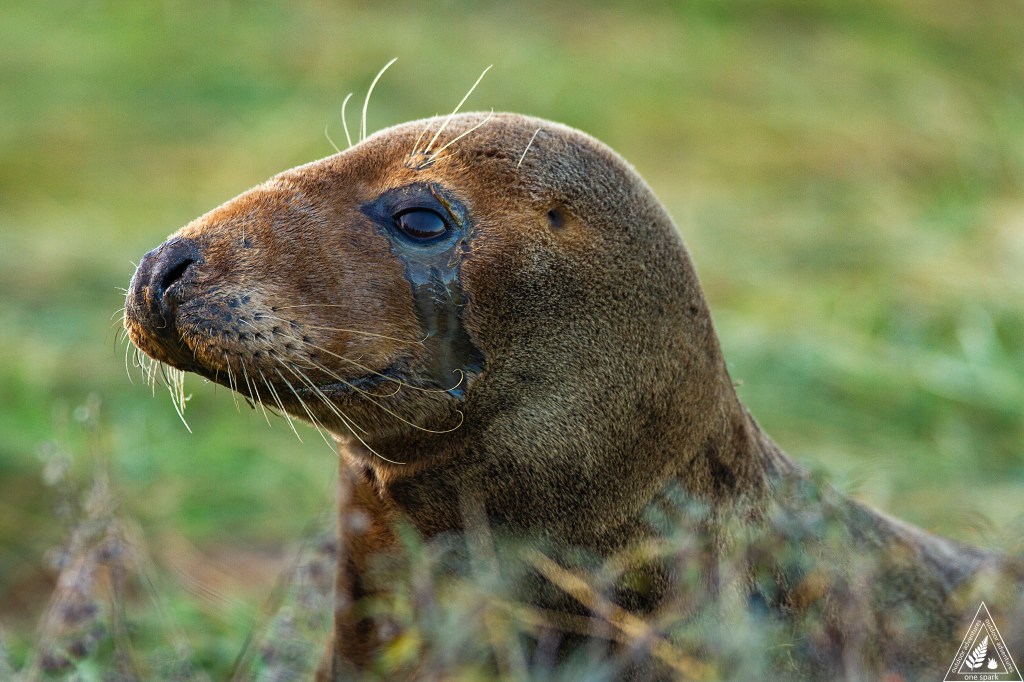
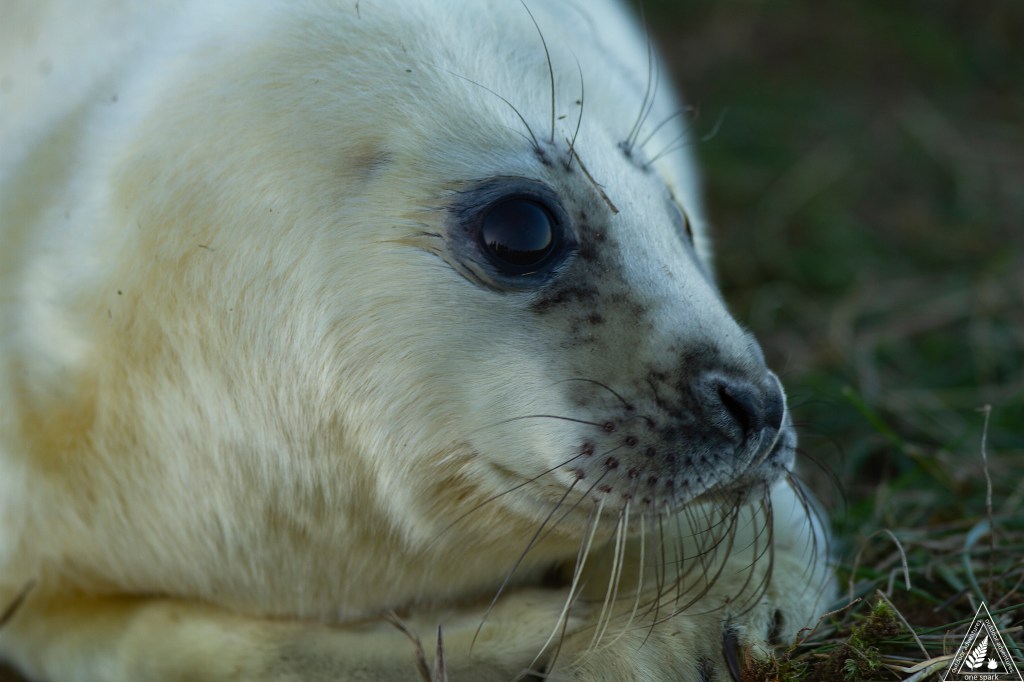
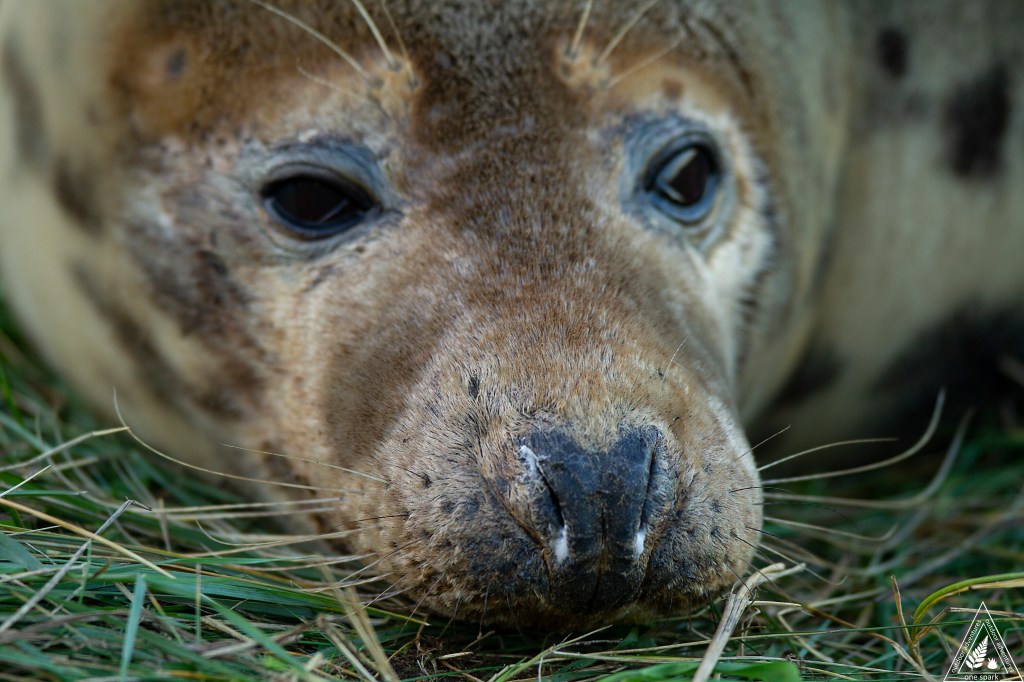
Looking straight on, Grey Seals nostrils are parallel, rather than V-shaped as in Common Seals.
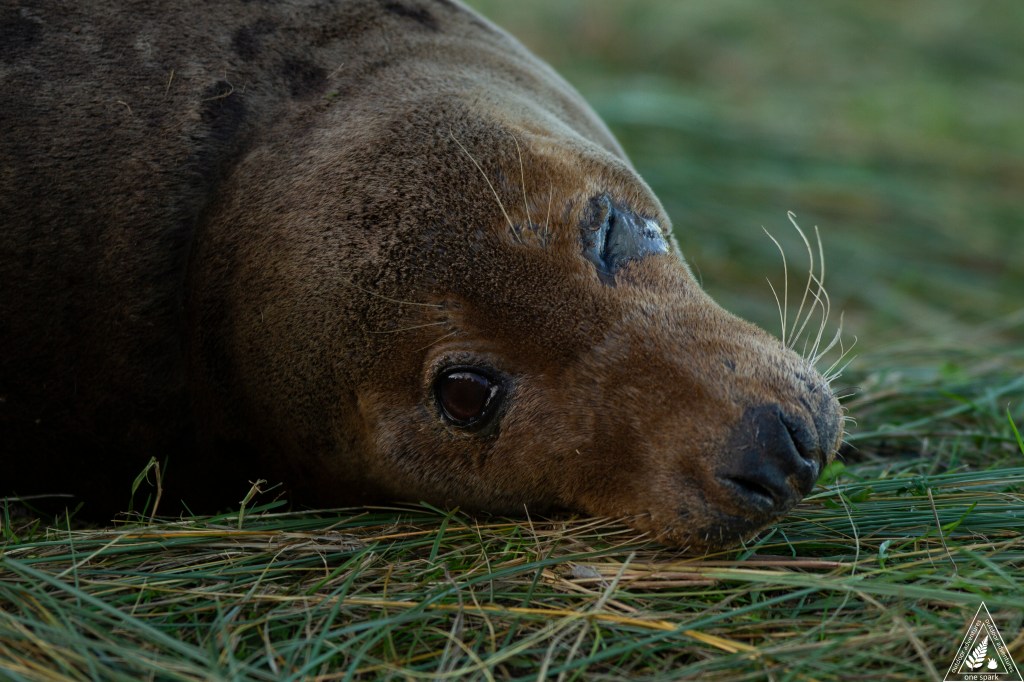
They live all around our coasts and if you’re by the sea, keep an eye out for an inquisitive head bobbing up out of the waves. Mainly grey in colour, the unique pattern of darker blotches and spots can be used to identify individuals. Maybe that’s a tool the Lincolnshire Wildlife Trust use when counting them.
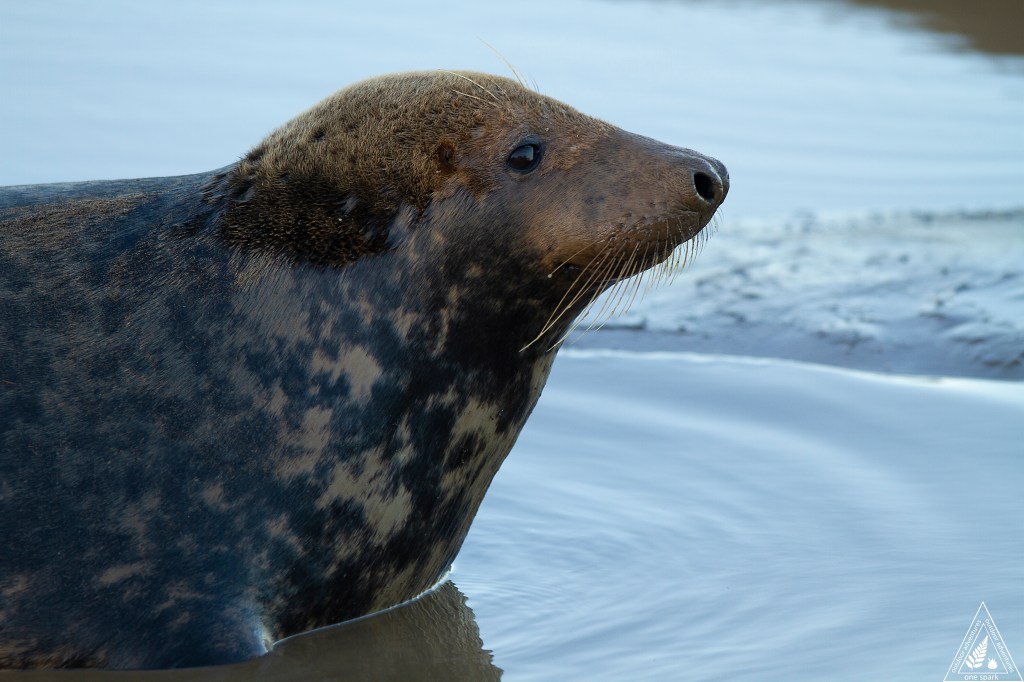
We have probably all seen seals clapping at various aquariums and zoos, but originally this behaviour was not thought to occur in the wild and it was understood that marine mammals communicated vocally. However, new research conducted by researchers at Monash University shows that Grey Seals clap their flippers as another form of communication in the wild, clapping their flippers underwater to deter a predator from attacking. During the mating season, the clapping can also be used as a way to find a potential mate. The researchers were astonished at how loud they were able to clap underwater, but it is perhaps logical that they do, given the reasons for which they do it.
Male Grey Seals (bulls) can measure up to two metres in length and weigh a massive 300 kg. Bulls arrive on our shores before the females and stake out a territory for the winter. The females (cows) arrive soon after, looking for a quiet spot to give birth, and leading to noisy clashes between males who want to claim them for their ‘harem’.
During the pupping season, male Grey Seals also come ashore to mate. The largest males, usually more than 10 years old, compete for a position within groups of breeding females. Occasionally males fight and may sustain deep scars on their necks as a result.
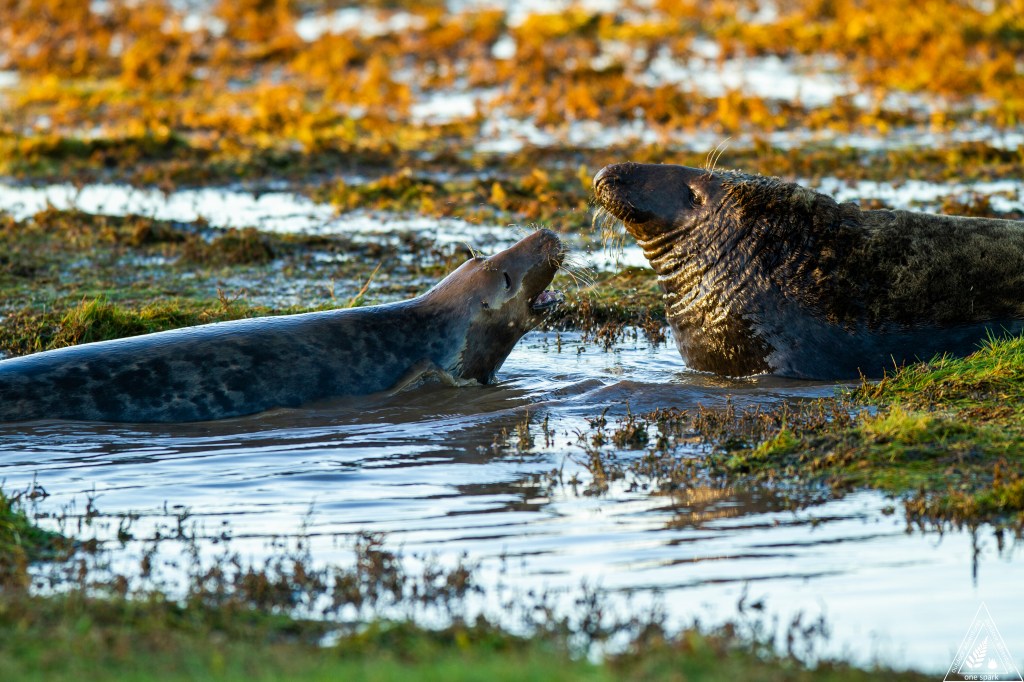
Around the UK the pupping season is between late August and January, but this varies depending on the region. On Skomer, West Wales, pups are born from late August into November whereas in Norfolk they are born from late October into January. Here at Donna Nook, it’s late November into December.
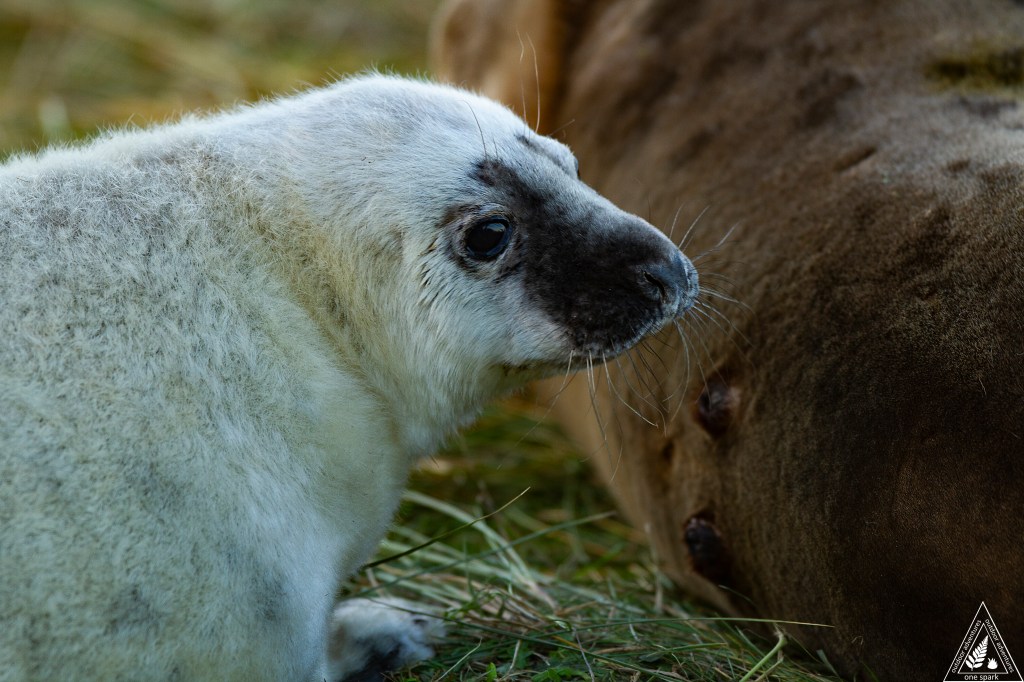
Winter may seem like a strange time to have pups, when icy winds are blowing, and the nights are long. One explanation is that after a summer of catching fish, the females are simply in great shape to feed their young.
Grey Seals are capital breeders; they forage to build up stored blubber, which is utilised when they are breeding and weaning their pups, as they do not forage for food at this time.
They give birth to a single pup every year, with females’ reproductive years beginning as early as 4 years old and extending up to 30 years of age. All parental care is provided by the female. During breeding, males don’t provide parental care, but they defend females against other males for mating.
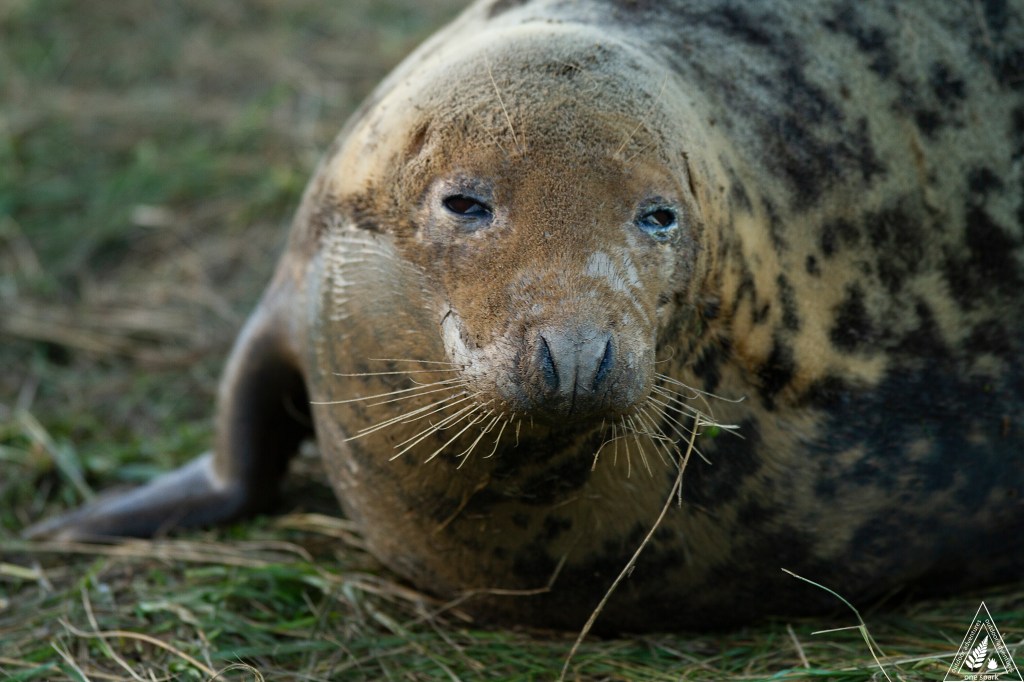
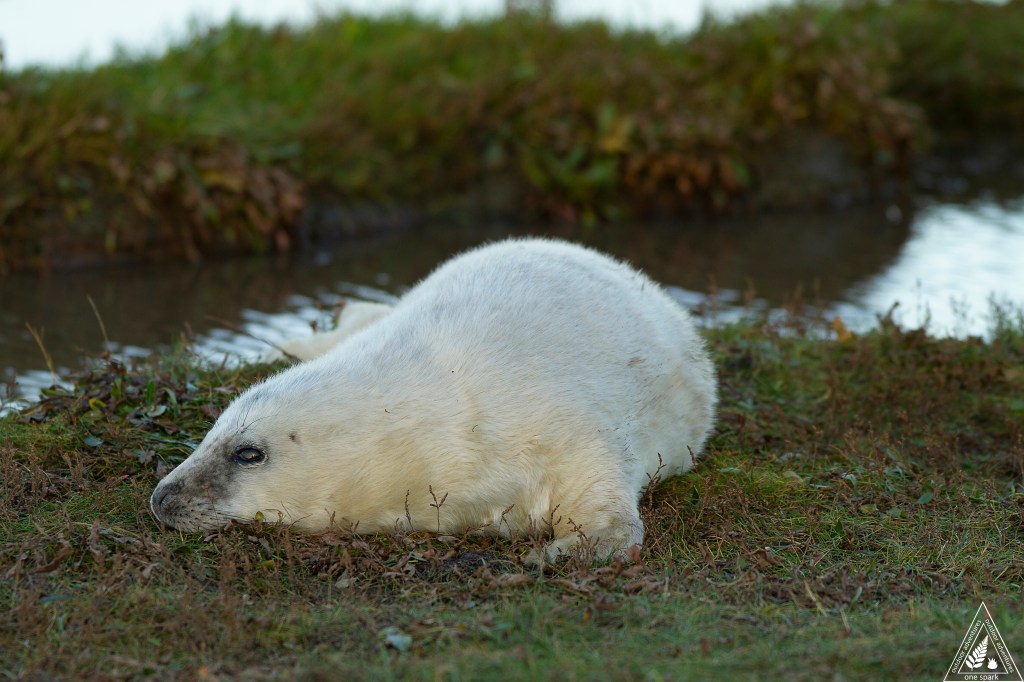
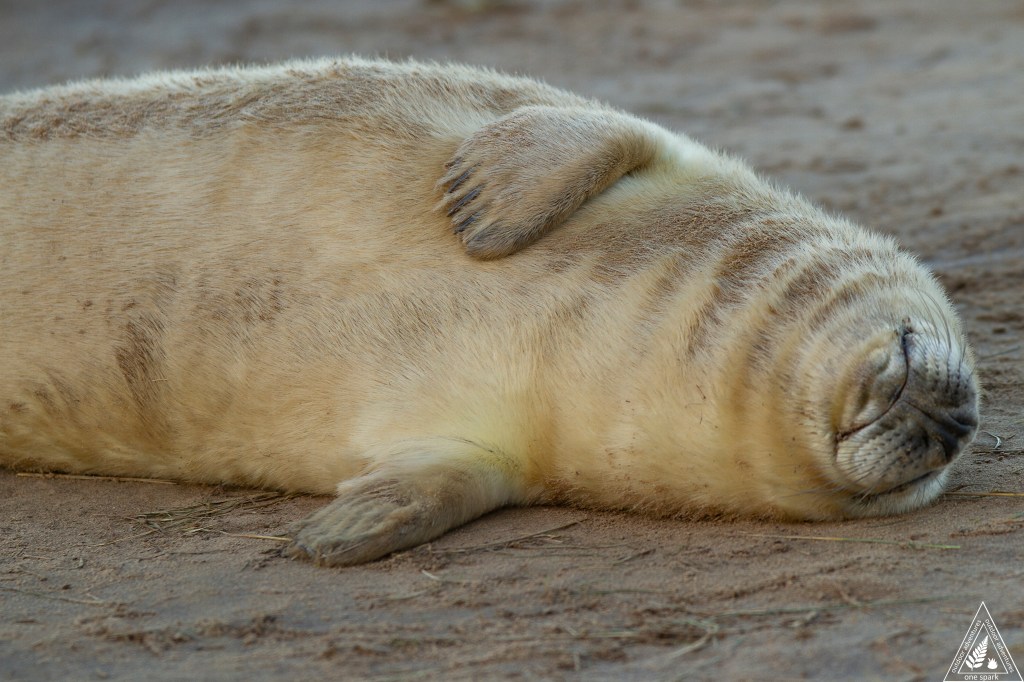
When the pups are born, the mothers spin round to sniff them and get to know their smell. At birth they weigh around 14 kg. and have a dense, soft silky white fur known as lanugo.
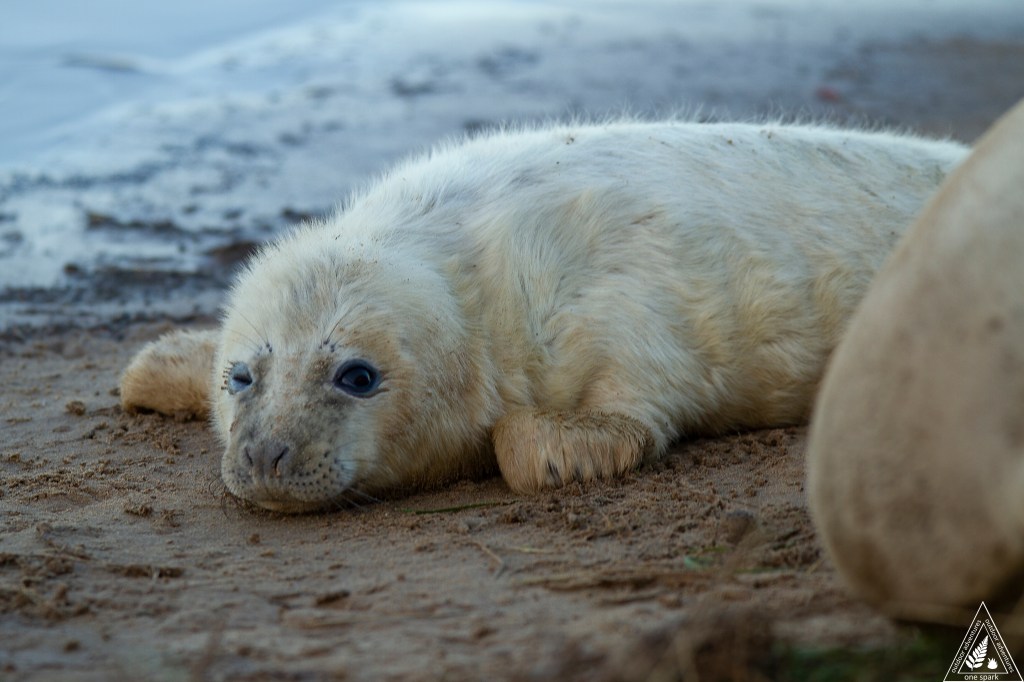
You might think that this is not good camouflage on sand or pebbles, but that’s because it’s a relic from the ice age when they would have been born on snow!
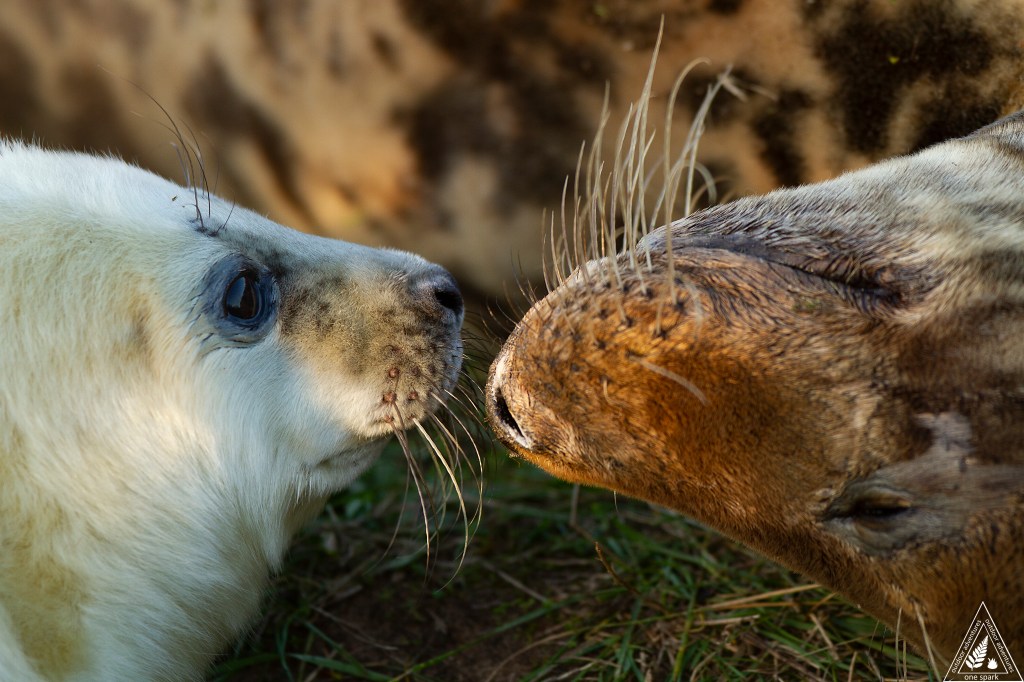
In general, colonies reach peak activity a month after the first pups are born and it is then that the noise levels peak too.
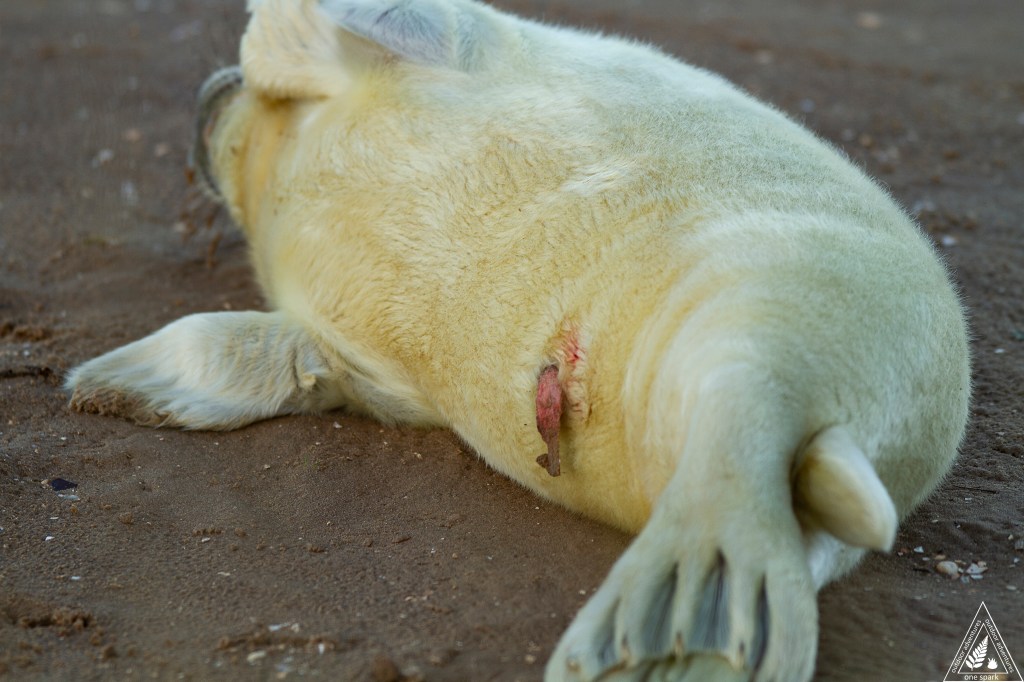
Female Grey Seals are dedicated mothers, spending several weeks feeding their pups and losing up to 65kg in the process. The pups drink two and a half litres of milk every day gaining about 2kg. in weight each day. The milk is so rich, pups can grow by as much as 30kg in two weeks. The fat-rich milk can consist of up to 60% fat. This noisy spectacle is great to see, and the pups sometimes sound like human babies crying. After a month or so, the females leave their pups and head back out to sea where they feed and mate again.
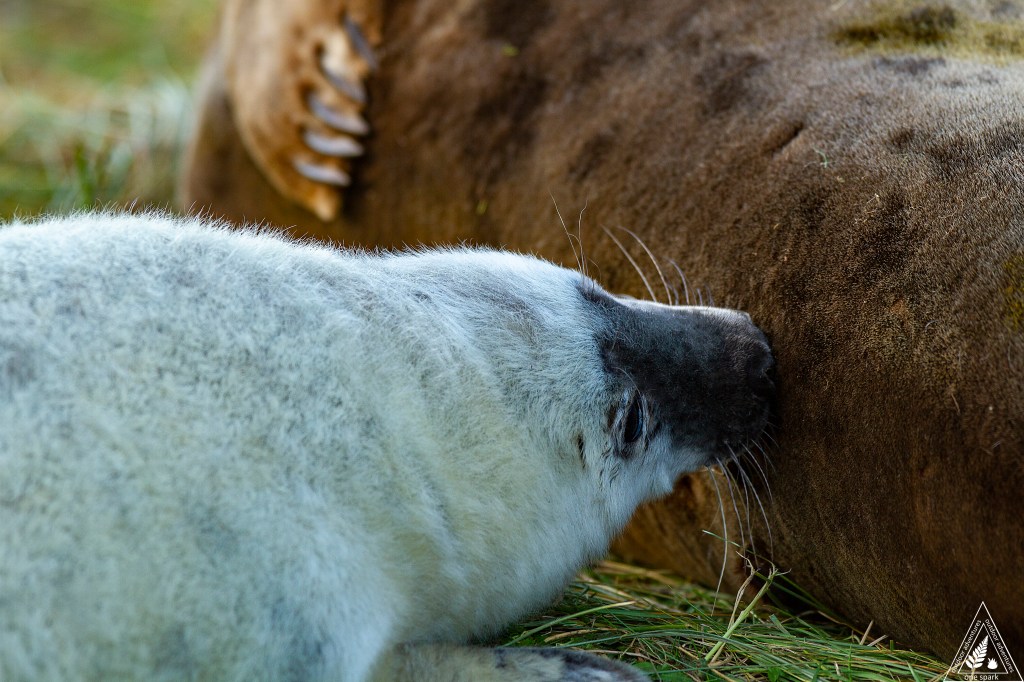
The pups undergo a post-weaning fast and can spend up to 2 weeks alone on the beach before they build up the courage to take the plunge into the sea and learn to swim and fish for themselves! By this time, they will have trebled their body weight, shed the pup fur, and grown dense waterproof adult fur. The weight gain consists mainly of a layer of blubber below their skin, which is vital insulation when they do go to sea.
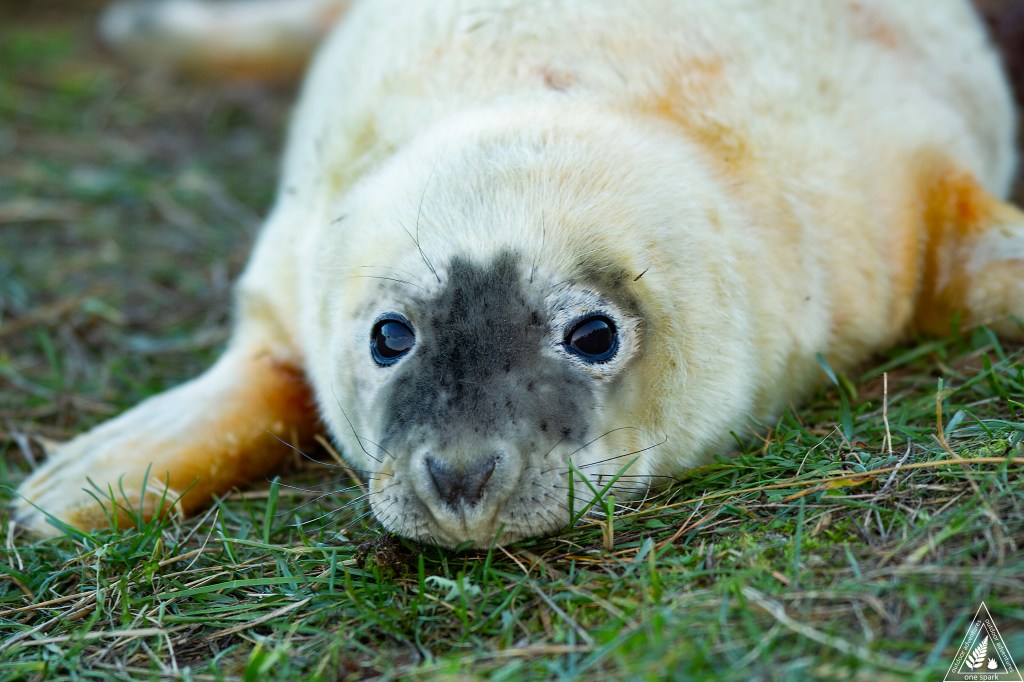
Seal pup first-year survival rates are estimated to vary from 80 to 85% to below 50% depending on location and conditions. Starvation, due to difficulties in learning to feed, appears to be the main cause of pup death.
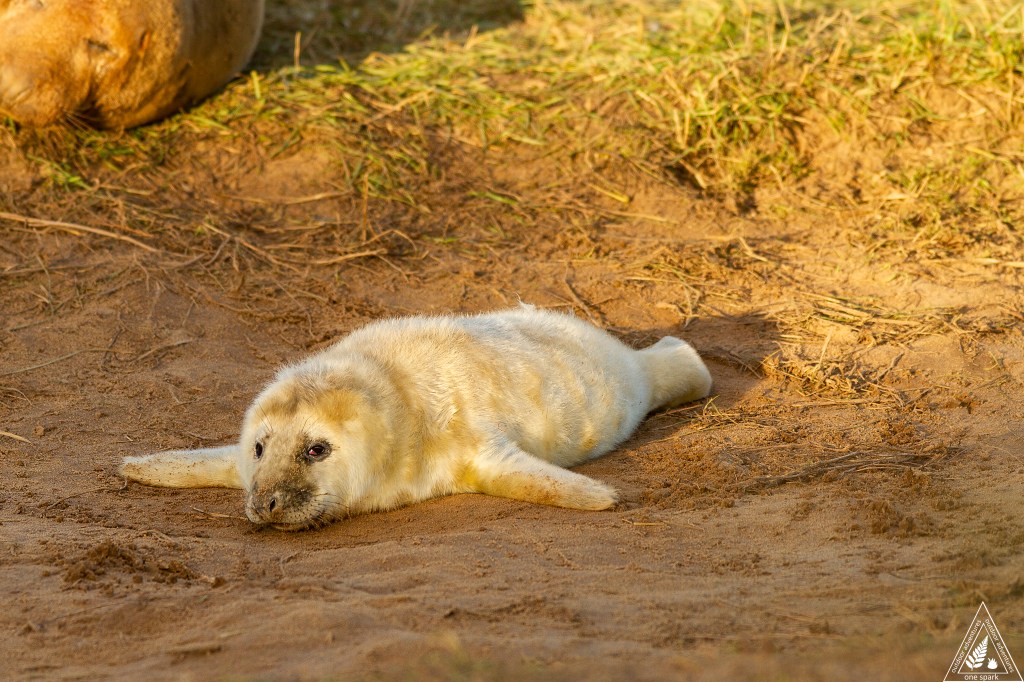
The gestation period of a Grey Seal is 11 months so the pups conceived by the females when they return to sea will be the pups that we see on the beaches next year!


I hope that you’ve enjoyed reading this and looking at the photographs. By the time we got there, the light was fading so it caused a bit of a problem for photography but I think these manage to capture the Grey Seal in all of its glory.
Please do post a comment if you have time to.
Andy, December 2022

 One Spark Outdoor Adventures
Great article and some amazing pictures!
LikeLike
Thanks! Glad you enjoyed it
LikeLiked by 1 person
Didn’t realise you had a website. Really interesting and detailed. Are there any books on the horizon? Bernice
LikeLike
Thanks Bernice, glad you liked it. No books on the horizon yet though. Not enough hours in the day at the moment!
LikeLike