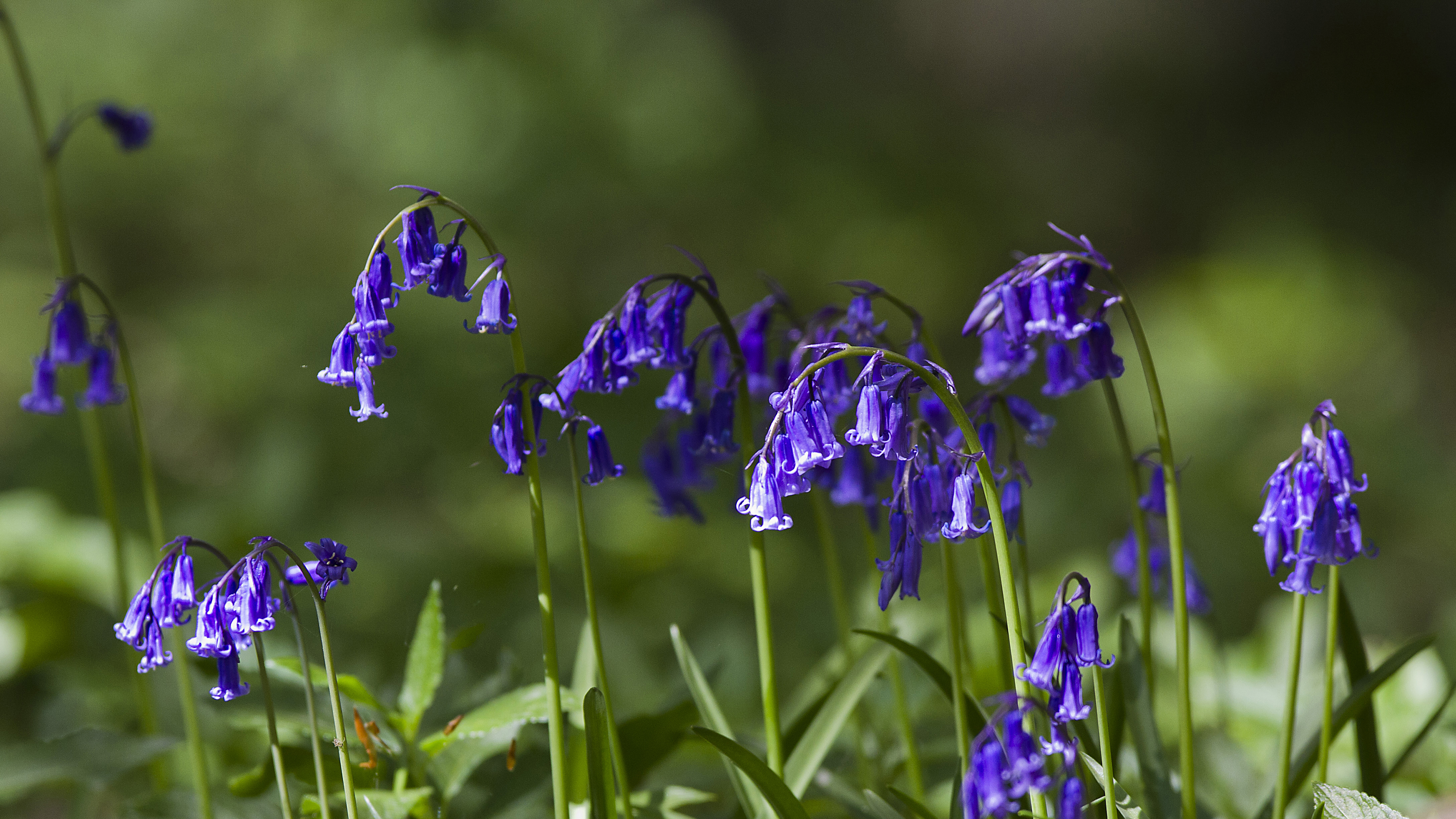
Hyacinthoides non-scripta (Bluebell), Far Wood, April 2020
It has been a strange couple of months. The world is gripped by a pandemic that has affected every part of our existence as human beings and business, not to mention social life, has all taken a pause. I wonder how many people have realised it as a time, knowingly or unknowingly, that nature has carried on unaffected by it all.
Spring, by its very nature, is a time of new growth, many plants coming out of winter hibernation in search of the light provided by the sun. If you come on one of our courses you will learn about astronomical seasons which refer to the position of Earth’s orbit in relation to the Sun, and equinoxes and solstices. This is due to the 23.5 degrees of tilt of the Earth’s rotational axis in relation to its orbit around the Sun. Since the seasons vary in length, the start date of a new season can fall on different days each year. This year, 2020, Spring began on the 20th March and it ends on the 20th June when we move into the start of Summer!
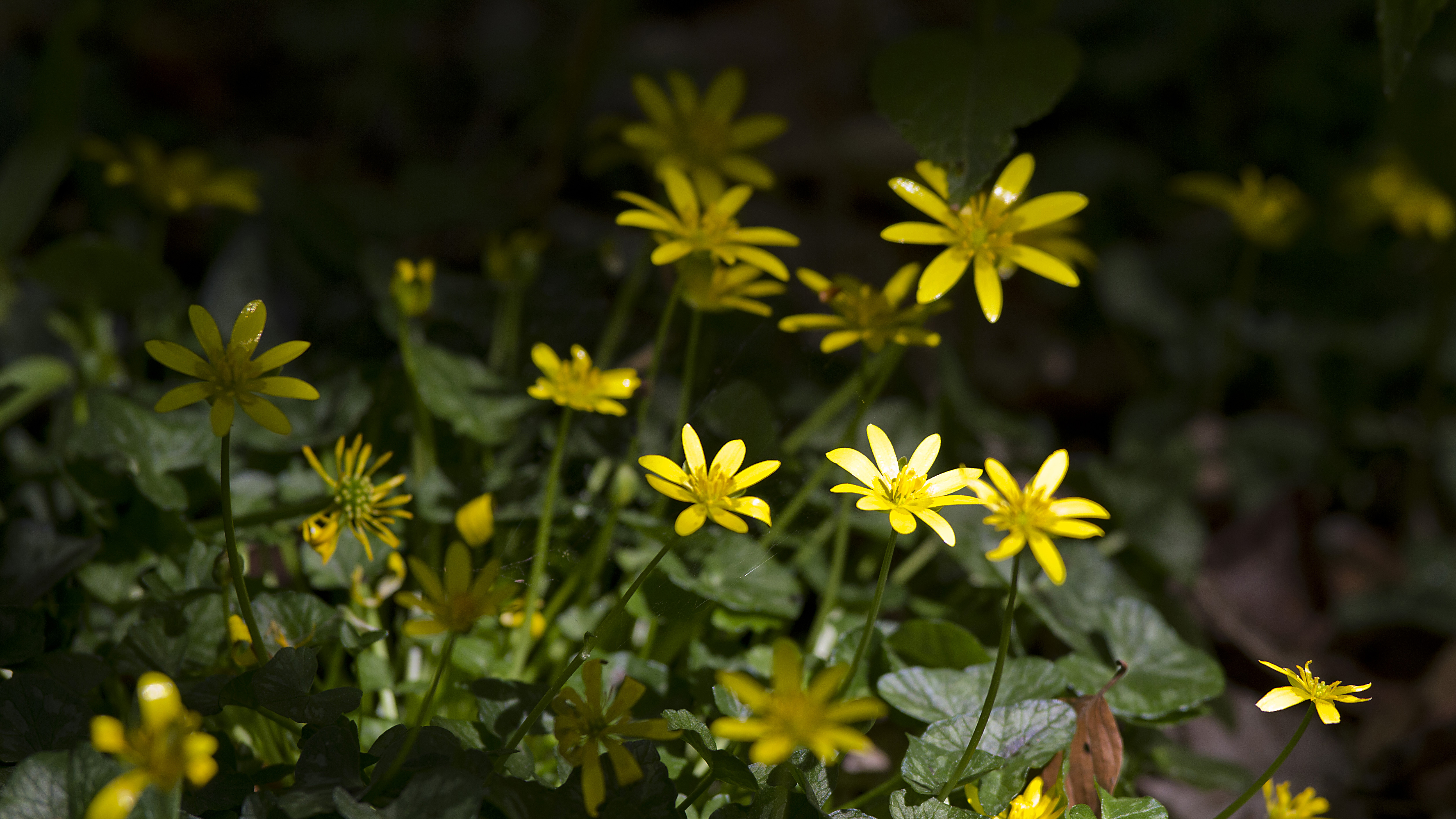
Ficaria verna (Lesser Celandine), Far Wood, April 2020
What better place to start observing the start of Spring that your local ancient woodland? My local wood is called Far Wood and it is in North Lincolnshire. About sixteen acres are designated as an SSSI (Site of Special Scientific Interest) and there are many species growing there which are known as Ancient Woodland Vascular Plants (AWVPs).
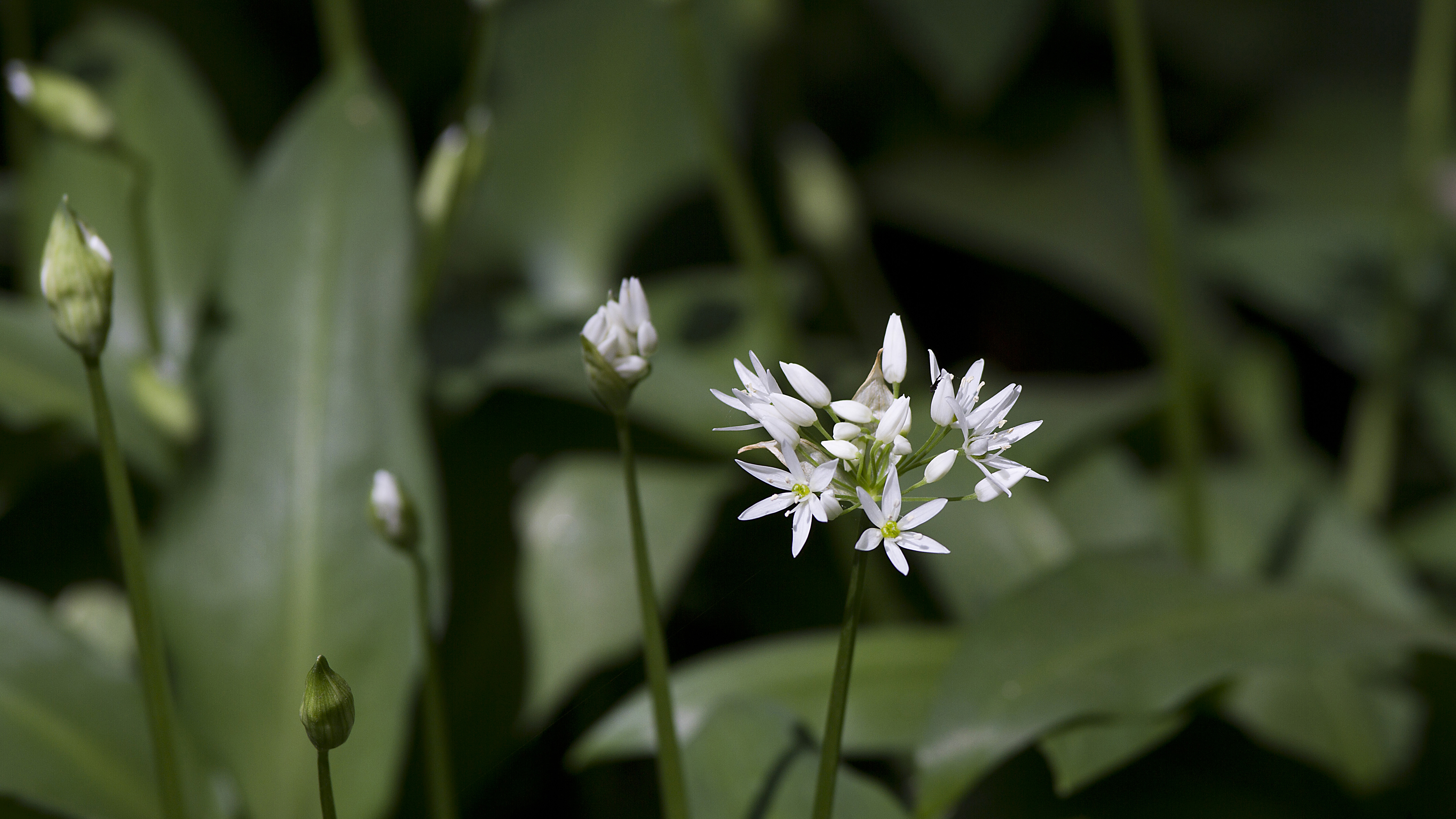
Allium ursinum (Ramsons or Wild Garlic), Far Wood, April 2020
I will just explain what that means. Generally, the older the habitat, the more species it will support. And the more species it supports, the greater will be the site’s importance for nature conservation. Therefore, in theory, it is possible to use the number of species present as an indication of habitat quality. These species obviously include plants but also mammals, birds, insects, funghi, bryophytes and lichens.
It is exceedingly difficult to find out how many species of, say, insects or fungi are present, and even small sites would require many years to survey thoroughly. Mammals are elusive, birds too mobile and bryophytes or lichens often too difficult to identify to be useful indicators of habitat quality. With lichens the situation can be confused by air pollution (plenty of that here with our heavy industry) and by coppice management, which eliminates many lichens of mature trees and causes large fluctuations in light levels and humidity, the key two things that lichens rely on.
For the layman, which I consider myself to be, and which probably most of us are, the only really useful group of Ancient Woodland Indicators (AWIs), which are both relatively easy to locate and identify, are the flowering plants, known as Ancient Woodland Vascular Plants (AWVPs). The list of these varies depending on your geographical location but many are common throughout the UK. A high AWVP score is a relaiable indication of natural diversity.
So during the last week of April I visited Far Wood and took a lot of photographs which go to make up the video which follows. Some of the species are AWVPs, and some are not. Those that are bear the letters AWVP in the top left of the screen. I hope you enjoy watching the video as much as I did making it.
Andy

 One Spark Outdoor Adventures